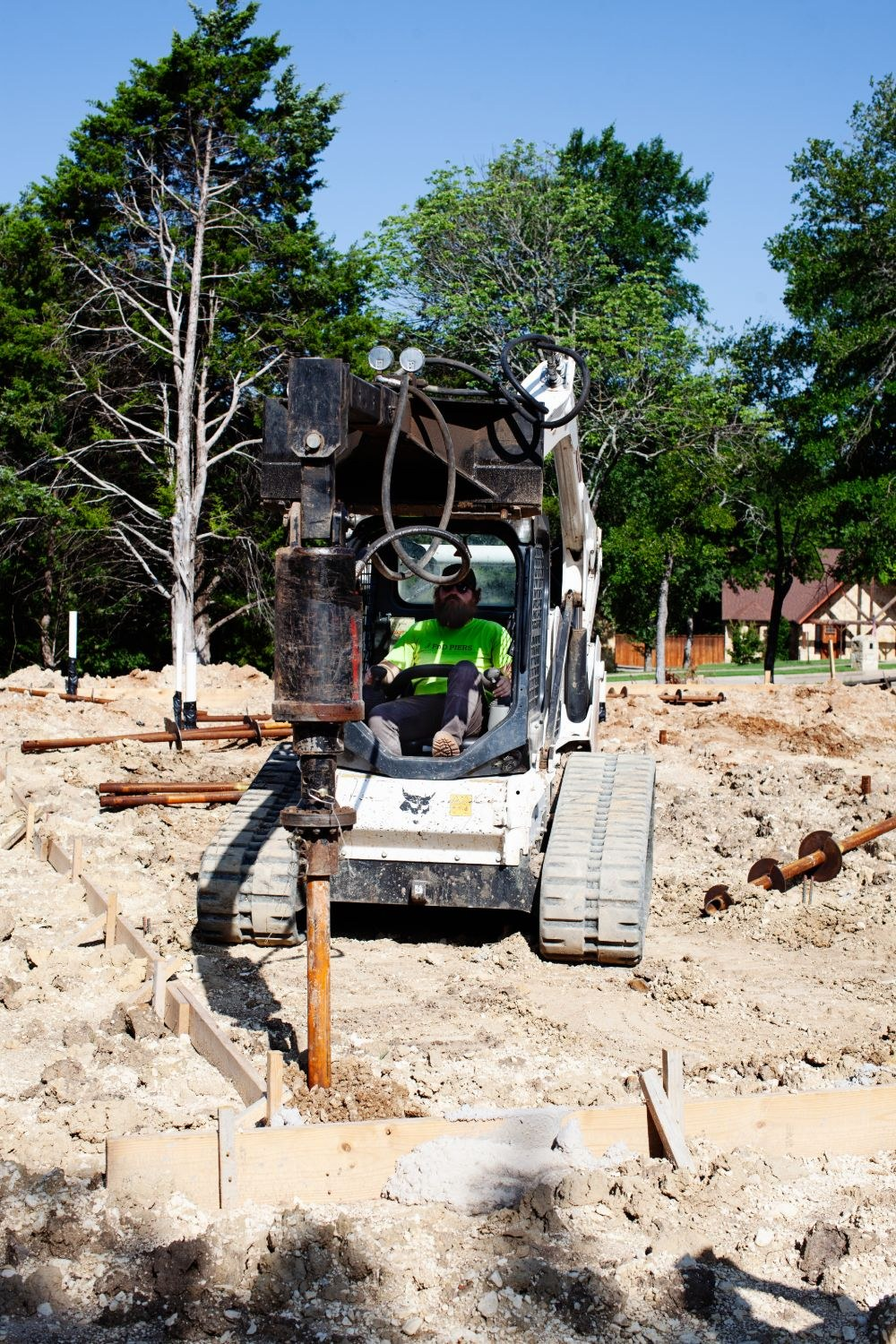
Pier Installation for Warehouses
Our rigs turn each pier down until it hits the torque your engineer specified. Depths of 10 to 30 feet are common here, and we go deeper when the soil requires it.
How an install works
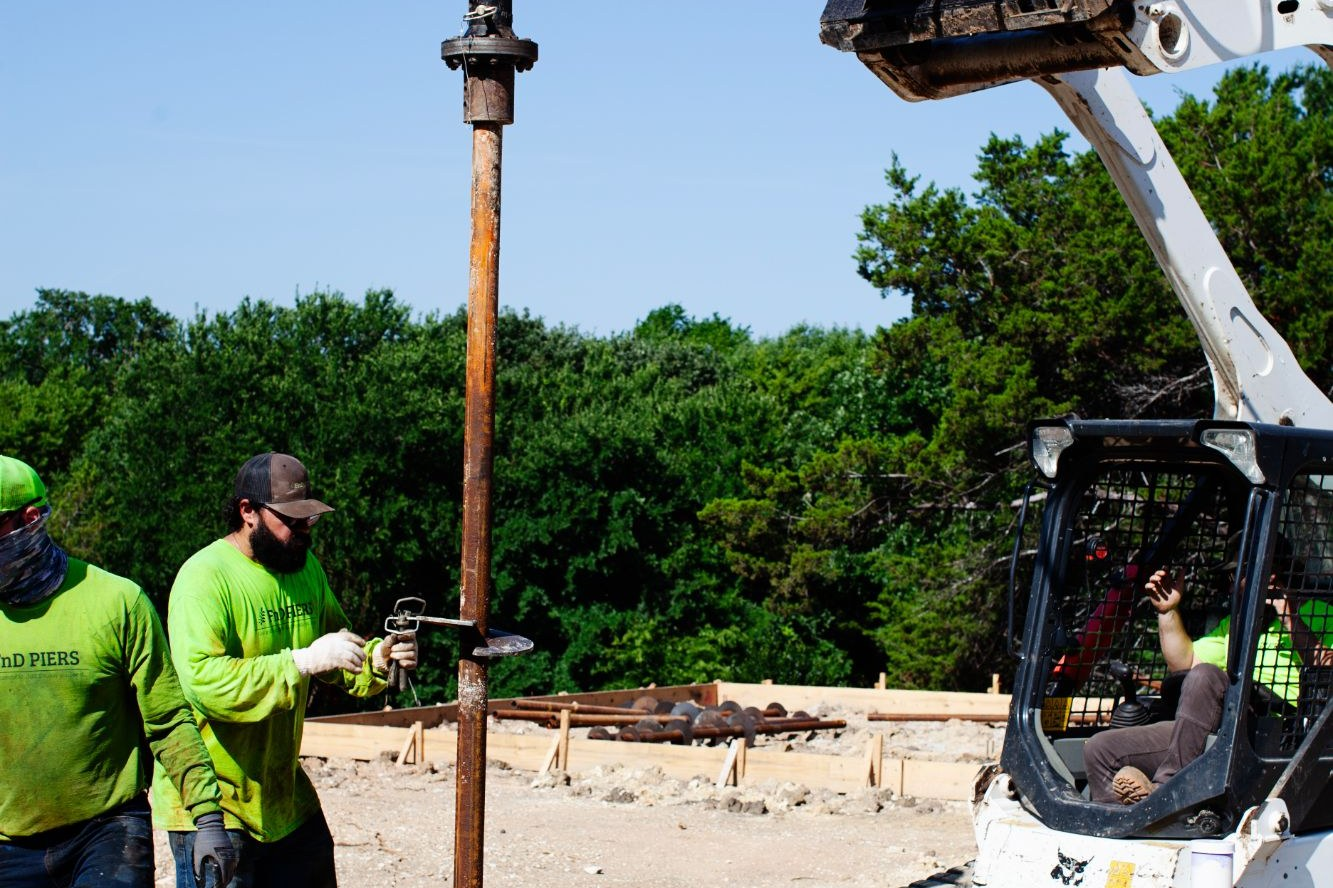
Deep foundations for the warehouses, distribution buildings, and light industrial sites rising around Haslet and the Alliance corridor. We build the piers, we drive them, and our own crews stand behind every one.
Haslet's flat, open land is what drew the big distribution buildings north of Fort Worth, and the clay under it is what keeps foundation engineers cautious. The same ground swells in wet months and shrinks in dry ones, and a long, heavy slab feels that movement at every corner.
A warehouse floor is a lot of concrete resting on a lot of ground. When the soil moves unevenly across that footprint, the slab and the walls tied to it can drift out of plane. Piers carry the load to stable soil below the moving layer.
Racking, forklift traffic, and loading docks put concentrated weight on the structure. Docks in particular tend to show settlement first because the apron slab and the building slab sit on different fill.
Large roofs shed a lot of water, and paved yards direct it somewhere. Where that water collects against a building edge, the soil under that edge cycles between soggy and dry faster than the rest.
Measure first. On an existing building we survey floor and wall elevations with a zip level and look at drainage and building history. If the data points to water management rather than structure, we tell you so.
One symptom rarely proves anything. Several of them together, or one that keeps getting worse, deserve a closer look from an engineer.
We make the piers and we install them. When one company does both, a question about a pier goes to one phone number.
Our rigs turn each pier down until it hits the torque your engineer specified. Depths of 10 to 30 feet are common here, and we go deeper when the soil requires it.
How an install works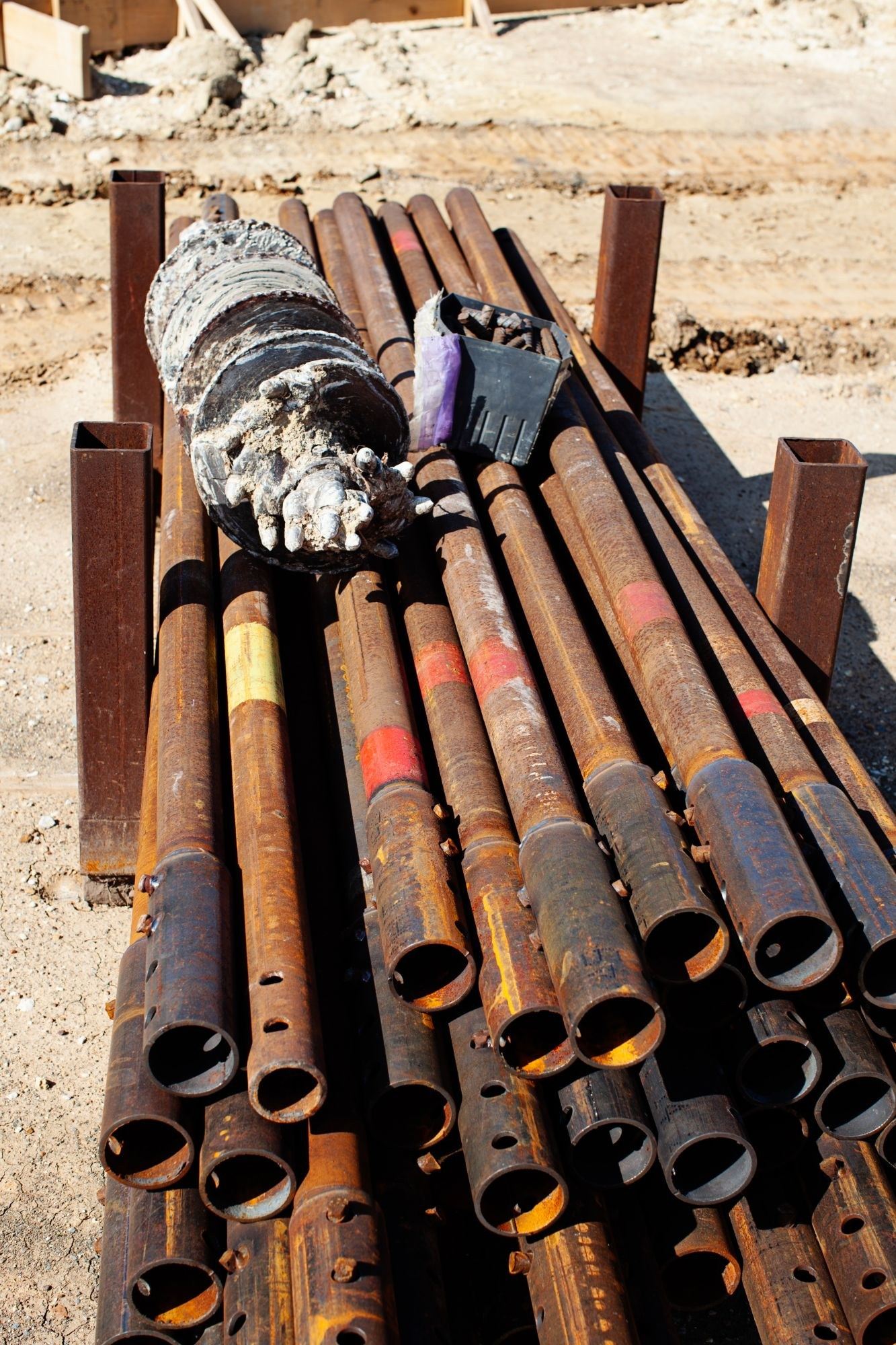
Contractors and engineers who run their own crews can buy our J55 steel, ASTM A572 Grade 50 helical piers straight from us.
Shop and order piers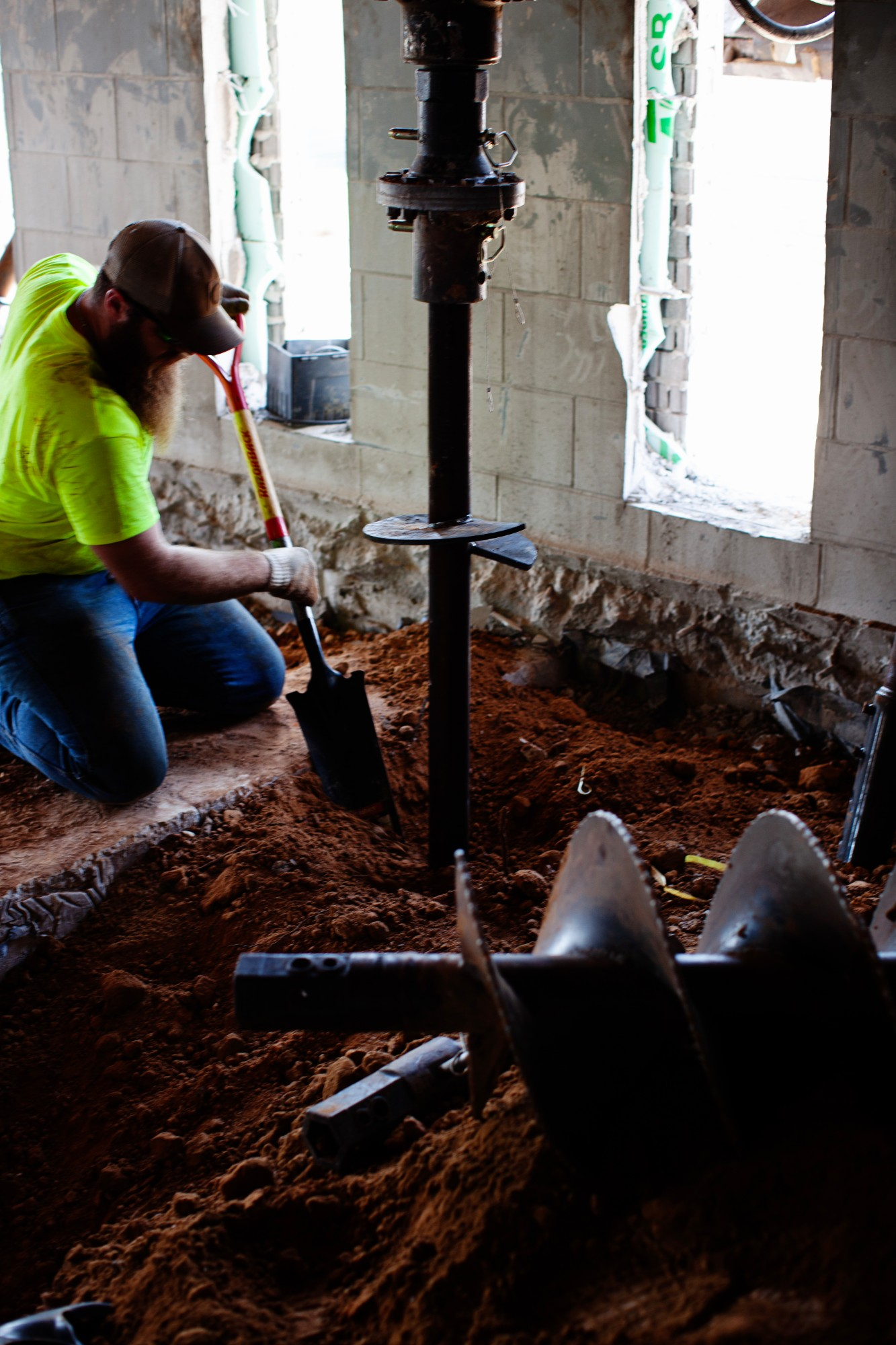
When a building has already settled, we engineer a pier layout sized to its loads and to what the soil near Haslet will actually carry.
Underpinning basicsBring your drawings, geotech report, or just a description of the problem. For existing structures we survey elevations and look at drainage before anyone mentions piers.
We size pier spacing, shaft, and helix configuration around your loads and the soils on your report, then route that to your engineer for approval.
Our crew advances every pier until the torque reading meets the design value, adding extensions as needed instead of stopping at a fixed depth.
You get the torque log tied to each pier location. Commercial installations carry a 10-year warranty, plus the Green Tag Guarantee on the job.
A credential tells you who we are. These records tell you what happened on your site.
A pier stops turning when it reaches its required torque, not when a depth counter says so. Torque follows soil strength, which is what the structure is relying on.
The final torque for each pier is written down against where it sits on the plan. That sheet is what an owner or inspector checks later.
Compression tests confirm downward capacity and tension tests confirm uplift resistance. Our hydraulic test equipment records movement under load.
If the engineer of record has specified piers, we build what they drew. Any change in the field goes back to them for approval first.
J55 carbon steelASTM A572 Grade 50ASTM A123 hot-dip galvanizingASTM A780 repair standard
Our crews train at the in-house Helical Trade School, and CEO Bill Vaughan wrote Next Day Helicals, a field guide that other installers use.
| Criterion | Helical pier | Push pier | Drilled/poured pier |
|---|---|---|---|
| Starts carrying load | Right away, at installation | Relies on the weight of the structure | Once the concrete has cured |
| In wet clay | Installs without open holes | Excavation is slower and messier | Shafts can cave before they are poured |
| How capacity is proven | Torque reading at each pier | Resistance while driving | Inspection of the drilled shaft |
| How deep it goes | Until torque is met | Until it pushes against the structure | To a depth set beforehand |
"Big City Capability and Small Town Service! Bill Vaugn and team have the tools and expertise to solve any issues you may have, but the best part is the personal service and open and honest explanation of the entire process. Call FnD Piers, you will be in good hands."
"As business professionals, my husband and I have worked with FnD Piers for years. From its owner to its employees, they are one big family and their customers are part of the family. Over the top attitudes and altitudes. We highly recommend FnD Piers for its professionalism and integrity. The most trusted company in the business."
"FnD Piers is your go-to outfit for all things foundation! This Team is "the real deal.""
"FND Piers does excellent work — professional, efficient, and reliable every time. Their crew knows what they’re doing and gets the job done right. Highly recommend them for any helical pier or foundation work."
Haslet sits along U.S. 287 on the north side of Tarrant County, roughly 17 miles from downtown Fort Worth. Our crews serve Haslet's zip code and the commercial and industrial sites around it.
Right down U.S. 287, about 6 miles south.
Helical piers in Saginaw →Straight south on I-35W and U.S. 287, around 17 miles to downtown.
Helical piers in Fort Worth →Southwest past Saginaw, around 12 miles.
Helical piers in Lake Worth →East of I-35W on the north side, about 12 miles.
Helical piers in Keller →Send plans or describe the structure and we will reply with a written quote. Once the project is approved, test holes are free.