Choosing the Right Foundation System Matters
Every successful residential or commercial construction project starts with a solid foundation. But choosing the right type—helical piers vs. concrete piers—can make a major impact on cost, timeline, structural integrity, and future maintenance.
At FnD Piers, we help general contractors, engineers, and developers make the right decision based on soil conditions, load requirements, and construction goals. In this guide, we compare helical piers and traditional concrete piers to help you decide which is best for your next project.
Understanding Helical Piers vs Concrete Piers
When it comes to foundation systems, selecting the appropriate type can depend on several factors, including soil condition, climate, and the specific requirements of the project. Both helical piers and concrete piers offer distinct advantages and disadvantages that should be carefully considered.
What Are Helical Piers?
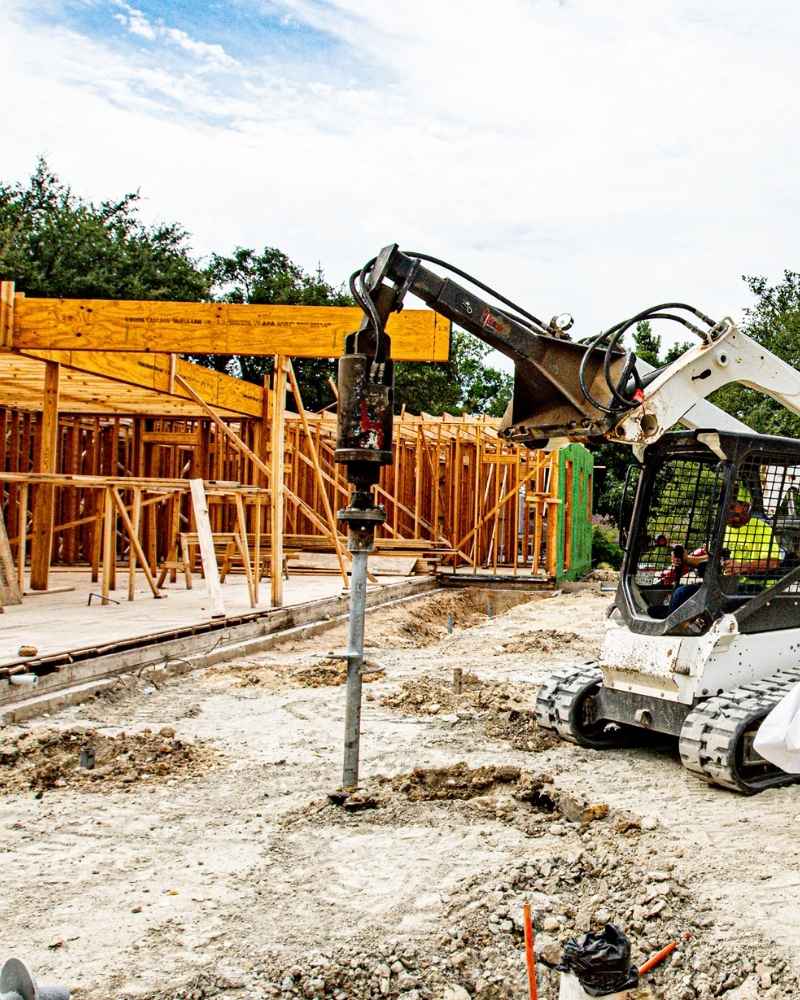
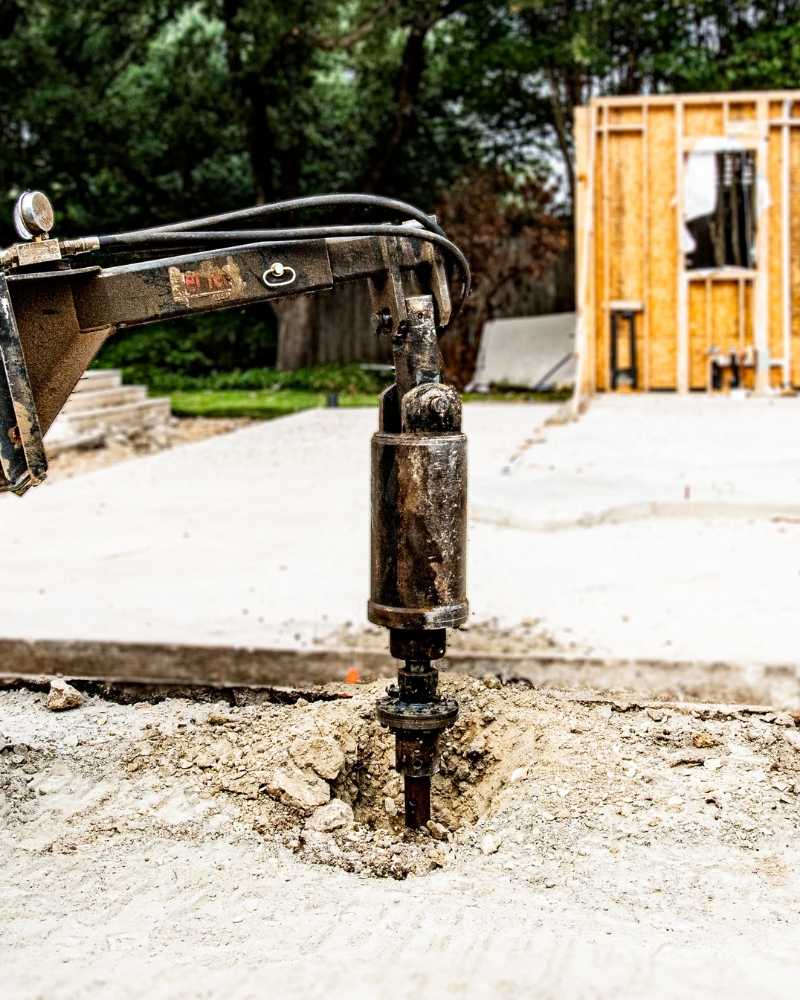
Helical piers (also called screw piles) are steel shafts with helical blades that are rotated into the ground using specialized equipment. They transfer building loads to deeper, more stable soil layers—without requiring excavation or curing time.
What Are Concrete Piers?
Concrete piers are traditional cast-in-place foundations formed by drilling holes, inserting rebar cages, and filling with concrete. These piers require excavation and a waiting period for concrete to cure before they can bear loads.
This comparison table outlines key differences between helical piers vs concrete piers, but understanding each feature’s implications is equally important. Installation speed can significantly affect project timelines; a faster installation means that construction can progress without unnecessary delays, which is crucial in competitive markets.
Helical Piers vs. Concrete Piers: Key Differences
| Feature | Helical Piers | Concrete Piers |
|---|---|---|
| Installation Speed | Fast—no curing required | Slower—requires excavation and curing time |
| Weather Flexibility | Can install in wet, cold, or frozen conditions | Delays in rain or freeze conditions |
| Soil Suitability | Ideal for soft, expansive, or unstable soils | Less predictable in shifting or moist soils |
| Load Verification | Real-time torque monitoring ensures capacity | Requires testing or conservative design |
| Access Requirements | Low-clearance install possible | Requires large equipment and site prep |
| Environmental Impact | Minimal excavation; cleaner job site | More soil displacement and concrete waste |
| Cost | Higher material, lower labor cost | Lower material, higher labor & time cost |
| Longevity | 75–100+ years with corrosion protection | 50–75 years with quality concrete |
Understanding the project requirements and environmental conditions is vital to making the right choice. For example, if a project is being constructed in an area with high water tables or shifting soils, helical piers may offer the necessary flexibility and support.
When to Choose Helical Piers
- Your site has expansive clay, soft, or loose soils
- You need fast installation with minimal disturbance
- Your project is on a tight schedule or tight site
- You’re working in bad weather or winter months
- You need to retrofit an existing or historic structure
- You require immediate load-bearing capacity
When to Choose Concrete Piers
- You have stable soil with good load-bearing capacity
- Your timeline allows for curing time and site prep
- You’re using traditional construction methods with heavy equipment already on-site
- Your engineer has designed a system that relies on deep concrete elements
Choosing helical piers vs concrete piers can also be beneficial for projects that must adhere to strict timelines. For rapid construction needs, the ability to install helical piers quickly without the need for waiting on concrete to cure can be a game changer for developers and contractors alike.
On the contrary, if the soil is stable and the project timeline allows for it, concrete piers can be an economical choice due to lower material costs. They are often used in traditional construction methods, where existing heavy equipment can be utilized for excavation and pouring.
FnD Piers Can Help You Choose the Right Foundation
Still unsure which pier system is right for your commercial job, helical piers vs concrete piers? At FnD Piers, we offer:
-
- Site visits and soil consultations
-
- Collaborations with engineers and architects
-
- Torque monitoring and documentation
-
- Turnkey installation across Texas and the surrounding region
Build on the Right Foundation from Day One
Whether you choose helical piers or concrete piers, the right foundation system ensures the long-term success of your project. Let the experts at FnD Piers help you make the best decision for your soil, timeline, and budget.
Why Choose FND Piers?
At FnD Piers, we specialize in custom foundation stabilization using helical pier systems tailored to your structure and soil conditions. Forged by years in the field, our experienced team delivers precision, performance, and peace of mind—backed by industry-leading warranties.