In the discussion of foundation solutions, helical piers vs push piers is a crucial aspect to consider, as each method has unique advantages and potential drawbacks. Understanding the implications of your choice can make a significant difference in the stability and longevity of your structure. In this article, we will thoroughly examine helical piers vs push piers, highlighting the key differences and helping you make an informed decision.
When it comes to foundation repair, choosing the right underpinning solution is crucial for the longevity and stability of your structure. Two of the most common methods are helical piers and push piers. Understanding the differences between these systems can help you make an informed decision for your specific project needs. This article will explore helical piers vs push piers in detail, providing comprehensive insights and examples to help you determine the best option for your foundation repair, including case studies and expert opinions.
What Are Helical Piers?
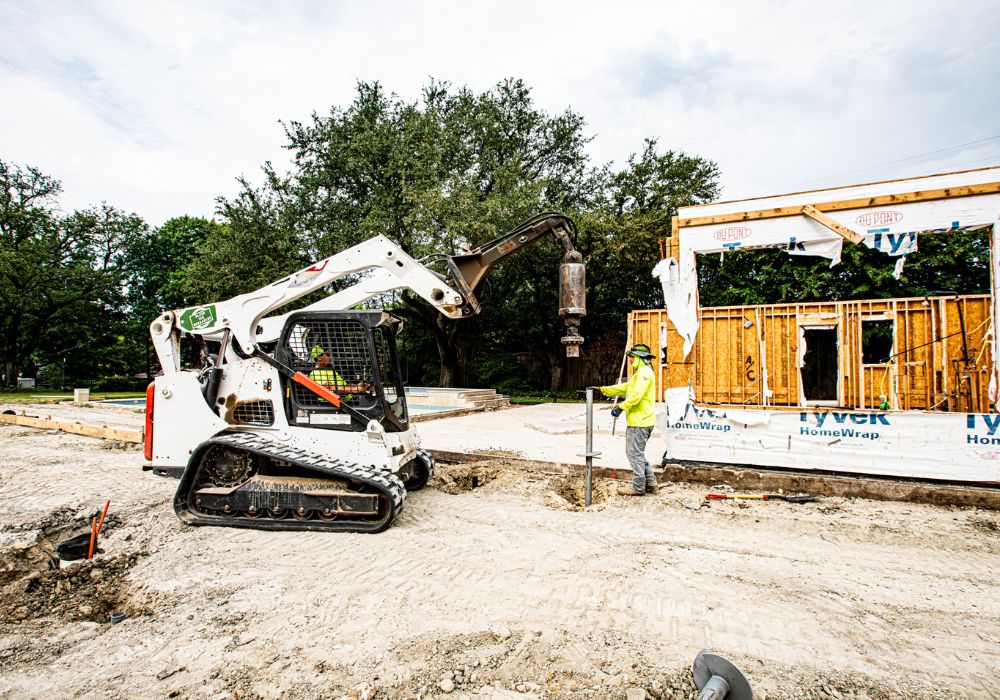
Helical piers (also known as screw piles) are steel shafts with helical plates welded to them. They are installed by screwing them into the ground until they reach stable soil or bedrock.
- Versatility: Works well in soft, wet, or expansive soils.
- Immediate Load-Bearing: Supports loads right after installation.
- Minimal Disturbance: Requires less excavation—ideal for tight spaces.
- Predictable Performance: Torque monitoring ensures capacity accuracy.
Considerations:
- Higher per-foot cost, though fewer piers may be needed.
- Less effective in shallow bedrock or dense obstruction zones.
What Are Push Piers?
Push piers (or resistance piers) are steel tubes driven into the ground using the weight of the structure. Once they reach stable soil, the weight of the building is transferred onto the piers.
Cost-Effective per Foot: More budget-friendly in some cases.
- Deep Foundation Potential: Reaches deeper strata if needed.
- Ideal for Heavy Buildings: Great for large commercial projects.
Considerations:
Soil Dependency: Requires substantial building weight.
More Disruptive Installation: Often needs heavier excavation.
Helical Piers vs. Push Piers: A Detailed Comparison
Understanding helical piers vs push piers can greatly influence your choice of foundation repair method.
| Feature | Helical Piers | Push Piers |
|---|---|---|
| Installation Method | Screwed into the ground | Driven into the ground |
| Soil Suitability | Versatile; works in various soil types | Best in stable soils with sufficient weight |
| Load Capacity | Determined by torque during installation | Relies on structure’s weight |
| Excavation Needed | Minimal | Moderate to extensive |
| Cost per Foot | Higher | Lower |
| Ideal For | Light to medium structures, limited access | Heavy structures, deep foundations |
Installation Method: Helical piers are screwed into the ground, providing immediate load-bearing capabilities, whereas push piers are driven into place, relying on the structure’s weight for installation. This fundamental difference can affect both the installation time and the overall cost of the foundation repair.
Soil Suitability: Helical piers excel in diverse soil types, including soft and expansive soils, making them versatile for various applications. In contrast, push piers are best suited for stable soils with adequate structural weight, which limits their use in certain conditions.
Load Capacity: The load capacity of helical piers is determined through torque monitoring during installation, allowing for precise calculations. Push piers, however, depend on the weight of the structure to transfer loads effectively, which can be a limitation if the building is not sufficiently heavy.
Excavation Needed: Helical piers require minimal excavation, making them ideal for sites with limited access or for projects that require preserving existing landscaping. Push piers often need moderate to extensive excavation, which can lead to greater disruption on the job site.
Cost per Foot: While helical piers tend to have a higher cost per foot, the overall expenditure may be lower due to the reduced installation time and fewer piers required. Push piers are generally lower in cost per foot, but this can vary based on the complexity of the installation.
Ideal For: Helical piers are perfect for light to medium structures with limited access, while push piers are designed for heavy structures and deep foundations, making the choice dependent on the specific needs of the project.
Ultimately, the decision between helical piers vs push piers should be based on site conditions, project requirements, and budget.
How to Choose the Right System
When deciding between helical piers and push piers, consider:
- Soil Conditions
- Building Weight
- Project Access
- Budget Constraints
Each system has strengths, and the best choice depends on your unique foundation needs.
📞 Need Expert Help?
At FND Piers, we specialize in fast, dependable foundation solutions trusted by concrete contractors, engineers, and builders. We even manufacture and install Next Day Helicals to help clients finish projects faster, no matter the soil or weather.
Call us today at (817) 402-7113 to speak with a foundation expert.