Why You Should Never Use Push Piers Foundations
At FnD Piers, we get a lot of questions about foundation repair methods, and one we’ve heard more than a few times lately is:
“Why don’t you use concrete push piers?”
It’s a fair question. On the surface, push piers might seem like a quick and affordable option. But when it comes to long-term foundation stability, they just don’t hold up—literally.
In this post, we’re going to break down exactly why we don’t recommend push pier foundations, using a real-life example from a recent school project we’re working on in Lipan, Texas. What we found under this school building shows exactly why concrete push piers are a gamble, especially when the stakes are as high as the structural safety of a building.
The Problem with Push Piers: A Real-World Example
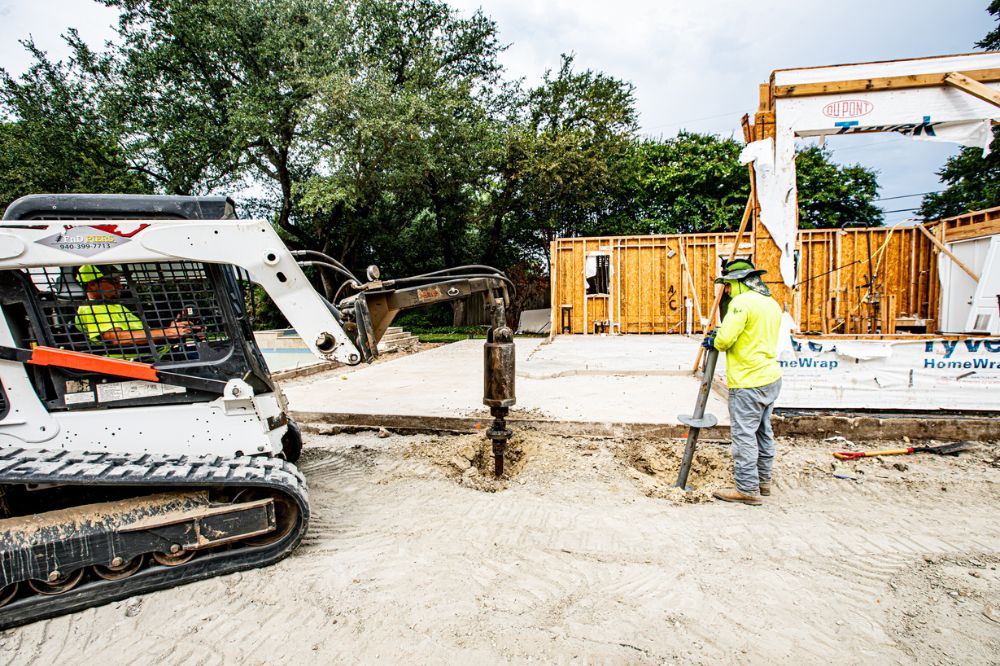
We were on-site at Lipan ISD, prepping the area for our helical pier system. As we began excavation under part of the school building, we uncovered what we believe to be one of the original concrete push piers from a previous foundation repair project. According to the school, this pier was installed in 2019—only a few years ago.
Here’s what we found:
- There was a noticeable gap between the pier and the structure above it.
- That gap was not just from the pier settling—it was more than the total thickness of the shims used to fill it.
- And most alarmingly, we could move the pier with just a finger.
That’s not the kind of stability you want under a building full of students, teachers, and valuable equipment. If you can move a support pier back and forth by hand, it’s not really supporting anything.
What Exactly Is a Push Pier?
Push piers—often made from concrete or steel—are vertical shafts installed under a foundation by pushing them into the ground using the weight of the building itself. The basic idea is to drive the push pier foundation deeper and deeper until it hits resistance (what’s called the “point of refusal”), then stop and shim the gap between the pier and the foundation above. The problem is… this method depends entirely on the weight of the structure and the resistance of the soil. And that’s a risky combo. If the soil is soft, or the building isn’t heavy enough to push the pier deep enough, you end up with a pier that’s barely below the surface—sitting in unstable soil that will continue to shift and settle. Even worse, the pier might feel solid at first, only to loosen over time as the soil gives way again.
Understanding the implications of Push Pier Foundations is crucial for any construction project.
Why Push Piers Don’t Work Long-Term
Here’s the issue with push pier foundations in plain terms:
- They stop when the ground pushes back. That “point of refusal” might be just a few feet down if the building isn’t heavy enough to drive the pier deeper.
- They don’t anchor into anything solid. Unlike helical piers, which are drilled into place until they reach engineered torque values, push piers just rely on friction and compression.
- There’s no guarantee they’ll hold. As we saw at the Lipan school site, over time, the soil shifts, the shims fall out or compress, and suddenly there’s a gap—and movement.
At the end of the day, you need your foundation to be rock-solid. A pier you can move with your finger is not doing its job.
What Makes Helical Piers the Better Choice
At FnD Piers, we install helical piers because they do what push pier foundations can’t:
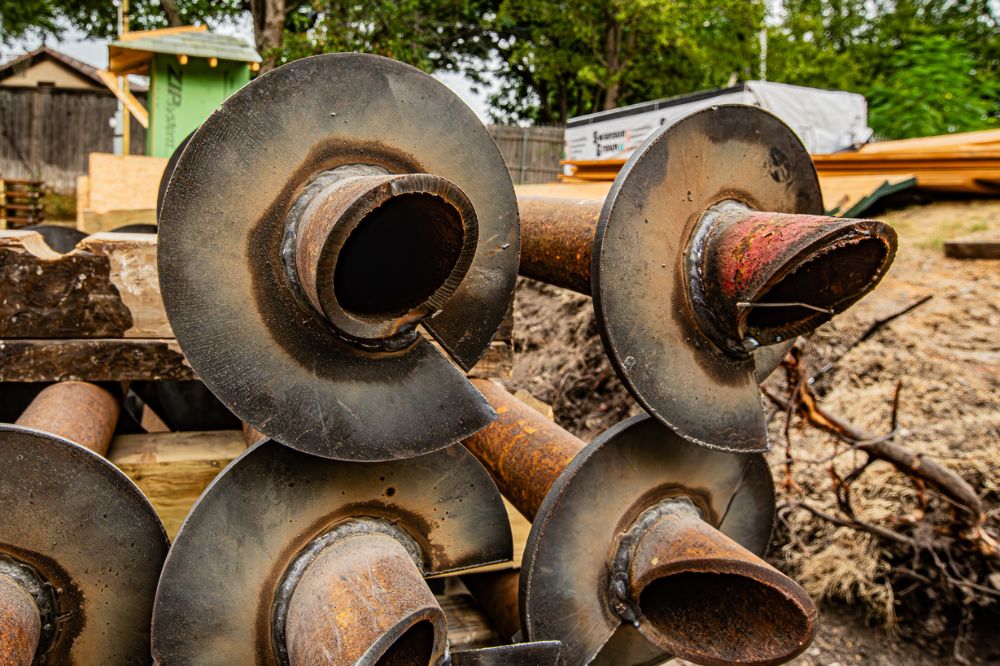
- They twist into the ground like giant screws, generating load-bearing torque and anchoring into stable soil layers.
- They don’t depend on the weight of the building to get into place. We install them to depth, no matter what.
- They provide long-term stability, with engineered values and predictable performance.
Helical piers aren’t just a better option for weak soils—they’re a reliable solution. We don’t rely on guesswork or gravity. We use measured torque values and proven depth to ensure every pier is secure and holding its load.
Why Cutting Corners Isn’t Worth It
We understand why some contractors or homeowners might go for push pier foundations. They can be cheaper. They go in fast. And on paper, they might look like a viable fix.
But foundation repair is one area where shortcuts turn into expensive do-overs. What looks like savings today can become a major repair tomorrow—especially when your pier system fails and the building shifts again.
As we’ve seen firsthand, push pier foundations can:
- Create gaps between the pier and structure
- Shift and settle over time
- Require costly future repairs—or complete replacement
At FnD Piers, we don’t believe in band-aid fixes. When we put our name on a project, we’re committing to a foundation that lasts.
If you find yourself in need of foundation repairs due to preexisting push pier foundations, don’t hesitate to give us a call so we can get you back on solid ground!
Ready to Stabilize Your Foundation?
If you’re seeing signs of foundation failure—such as cracks, sticking doors, or uneven floors—don’t wait.
Call (817) 402-7113 today to schedule a free foundation inspection and discover how helical piers can restore the strength and stability of your home or building.