
When it comes to stabilizing foundations, especially in soils prone to movement or moisture variation, screw piles are one of the most effective engineering solutions available. Also referred to as helical piles, these deep foundation elements can be installed quickly, require minimal disturbance, and support significant loads, making them ideal for both residential and commercial construction.
At FnD Piers, we specialize in using screw piles to solve complex foundation challenges, particularly in North Texas where soil conditions like expansive clay and high moisture content are common.
This article explains what screw piles are, how they work, their benefits, and why they are a reliable choice for modern foundation projects.
1. What Are Screw Piles?
Screw piles are deep foundation elements consisting of a central steel shaft with one or more helical plates or “screws” welded to it. When installed, these plates allow the pile to be rotated into the ground like a giant screw.
Unlike traditional driven piles or poured footings, screw piles do not require:
- Concrete curing time
- Extensive excavation
- Large equipment access
This makes them well suited for sites with limited access, wet conditions, or challenging soil.
2. How Screw Piles Work
The installation process is straightforward yet highly engineered:
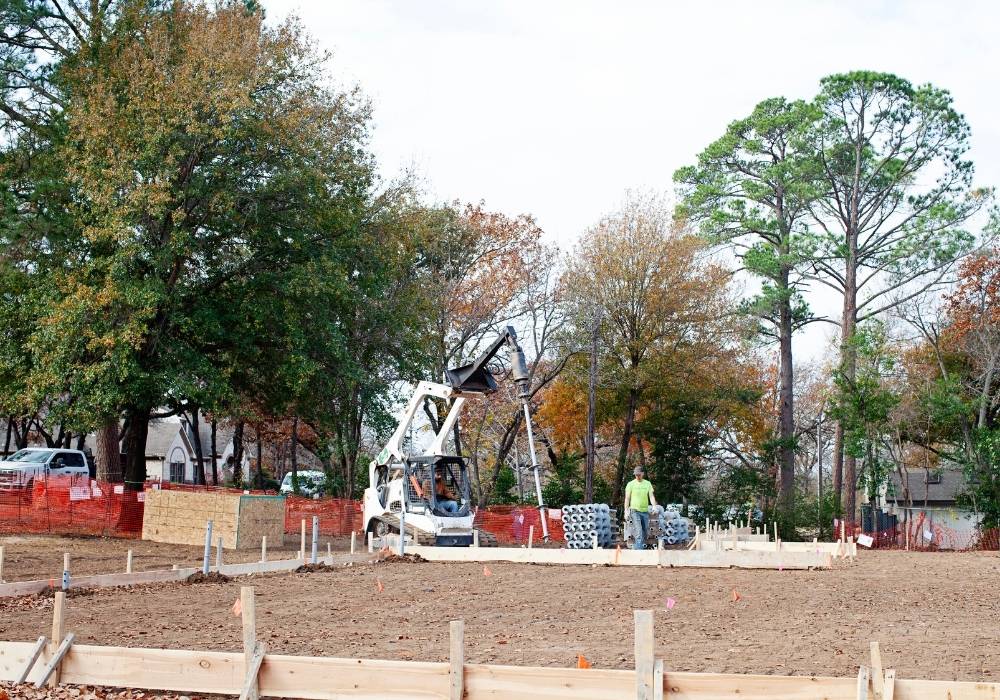
- Site Preparation: Access is cleared and equipment staged.
- Pilot Holes (optional): Test holes confirm soil conditions.
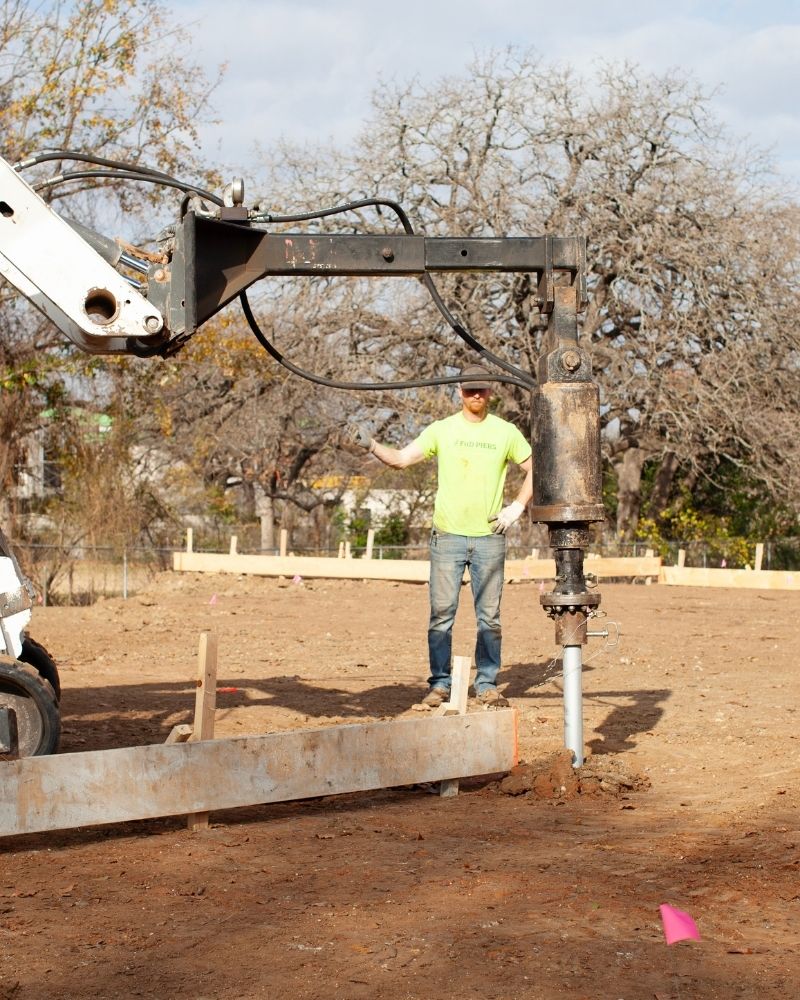
- Installation: A hydraulic drive head rotates the screw pile into the ground.
- Torque Monitoring: Real-time torque readings correspond to load capacity.
- Load Verification: Each pile’s performance is verified during installation.
The helical plates pull the shaft into stable soil strata, bypassing soft, weak surface soils. Because torque correlates with soil resistance, engineers can accurately determine that each pile reached its design load.
3. Why Screw Piles Are Effective in Challenging Soils
Screw piles are particularly effective where shallow foundations struggle:
Expansive Clay
In areas like North Texas with clay soils that swell and shrink with moisture changes, shallow footings can heave or settle unevenly. Screw piles transfer loads below this active moisture zone, delivering stability even when soils shift.
High Water Table
Wet soils undermine traditional footing support. Screw piles are installed deep below the influence of surface moisture and provide dependable anchoring even when groundwater is present.
Loose or Compressible Soils
Where soil lacks inherent strength near the surface, screw piles penetrate deeper layers that provide adequate support, eliminating the need for large concrete volumes.
4. Benefits of Using Screw Piles
Screw piles offer several advantages over conventional foundation methods:
Minimal Soil Disturbance
Because they are installed without excavation or concrete, screw piles leave existing landscaping intact and reduce site restoration costs.
Immediate Load Capacity
Unlike concrete footings that require curing, screw piles achieve full load capacity immediately upon installation.
Faster Schedule
Installation is quicker and less weather-sensitive. Projects with tight timelines benefit significantly.
Cost-Effective
While up-front material costs can vary, the reduced labor, schedule efficiencies, and minimized disruption often lead to lower overall project cost.
Versatility
Screw piles are suitable for:
- Homes and additions
- Decks and porches
- Pools and retaining walls
- Commercial buildings
- Industrial equipment foundations
5. Comparing Screw Piles to Traditional Footings
Feature | Screw Piles | Concrete Footings |
Installation Time | Fast | Slower |
Access Requirements | Minimal | Heavy equipment needed |
Soil Disturbance | Low | High |
Moisture Sensitivity | Low | High |
Load Verification | Immediate (torque) | Post-pour testing |
Weather Impact | Lower | Higher |
Long-Term Performance | High in variable soils | Variable |
This comparison reflects why many engineers and contractors choose screw piles when soil conditions or site constraints make traditional footings risky or inefficient.
6. How FnD Piers Uses Screw Piles for Reliable Foundations
At FnD Piers, screw piles are a foundational part of our solution set used wherever they provide the best performance and value.
Our Approach
- Soil Verification: We drill test holes to confirm real soil conditions rather than relying solely on historical bore logs.
- Engineer Collaboration: Designs are verified with structural engineers to ensure capacity matches project demands.
- Torque-Verified Installation: Each install includes torque documentation to confirm load capacity.
- Tailored Solutions: Whether residential or commercial, we select pile size, depth, and configuration for optimal performance.
Our focus is always on delivering reliable, documented outcomes that meet your project timeline and structural requirements.
7. When to Choose Screw Piles vs Other Solutions
Screw piles are often the preferred choice when:
- Soil is unstable or expansive
- Access is limited
- Weather could delay concrete work
- Immediate load support is required
- Minimal site disruption is important
They are commonly recommended for underpinning existing structures, new foundations in poor soil, and large structures requiring deep foundation support.
8. Summary: Screw Piles Deliver Long-Term Value
Screw piles are a modern, dependable, and versatile foundation solution that adapts to a wide range of soil and site conditions. Their ability to provide immediate load capacity, minimize disruption, and deliver consistent performance has made them a preferred choice for both residential and commercial projects.
If you are facing foundation challenges or want a solution engineered for performance and durability, screw piles warrant serious consideration.
Contact FnD Piers to Discuss Your Project
FnD Piers specializes in screw pile and helical foundation solutions tailored to North Texas soils and structural requirements.
Call: (817) 402-7113
Build with confidence. Build with verified performance. Build with FnD Piers.