When it comes to dependable foundation support and soil stabilization, Helical Anchors stand out as one of the most reliable engineered solutions available today. At FND Piers, we specialize in installing and engineering helical anchor systems that deliver stability, durability, and lasting performance for both residential and commercial foundation needs.
What Is a Helical Anchor?
A helical anchor, also commonly referred to as a helical pier, screw pile, or screw anchor, is a deep foundation support system made of a steel shaft with one or more helically shaped plates welded to it. This design allows the anchor to be mechanically “screwed” into stable, load-bearing soil layers, bypassing weak or unstable surface soils. This process transfers structural loads deep below the surface to firm strata, dramatically enhancing foundation performance.
Unlike traditional poured concrete footings that rely on large excavations and curing time, helical anchors are installed with minimal ground disturbance and can often be loaded immediately upon installation.
How Helical Anchors Work
The performance of helical anchors is rooted in a simple yet powerful engineering principle: the helical plates act like large screws in the earth. As the anchor advances, these helices generate torque and engage deeply with stable soil, creating a secure connection capable of resisting both downward (compression) and upward (tension) forces.
Installation typically involves:
- Site Evaluation: Geotechnical assessment to determine soil conditions and load requirements.
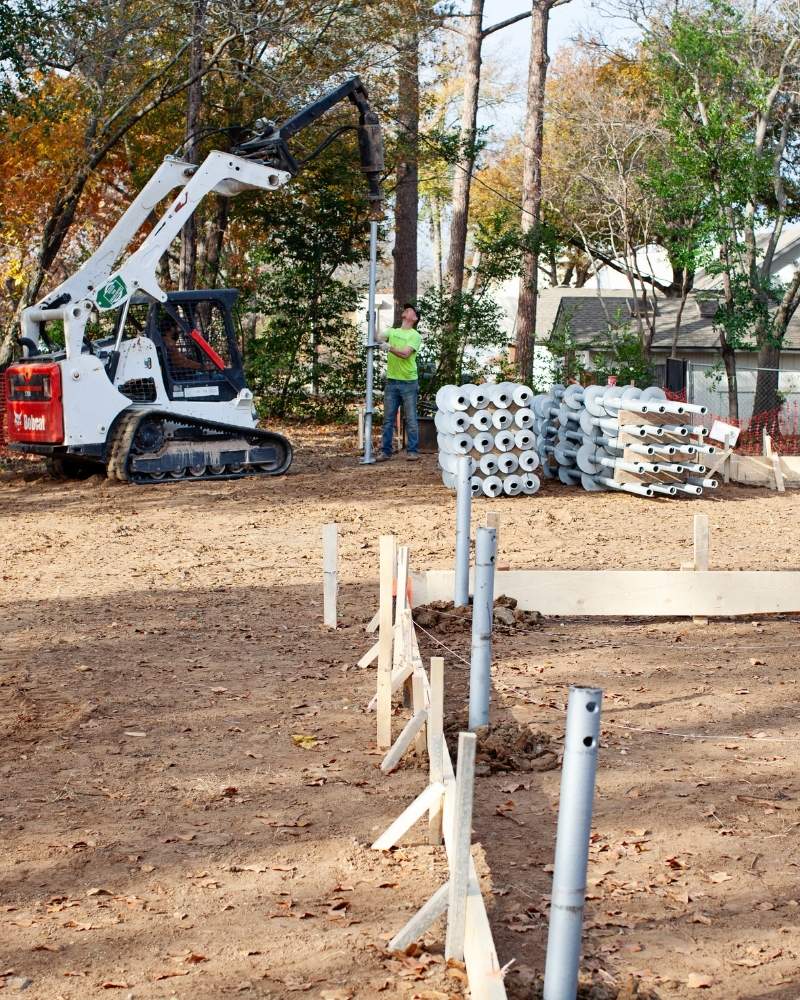
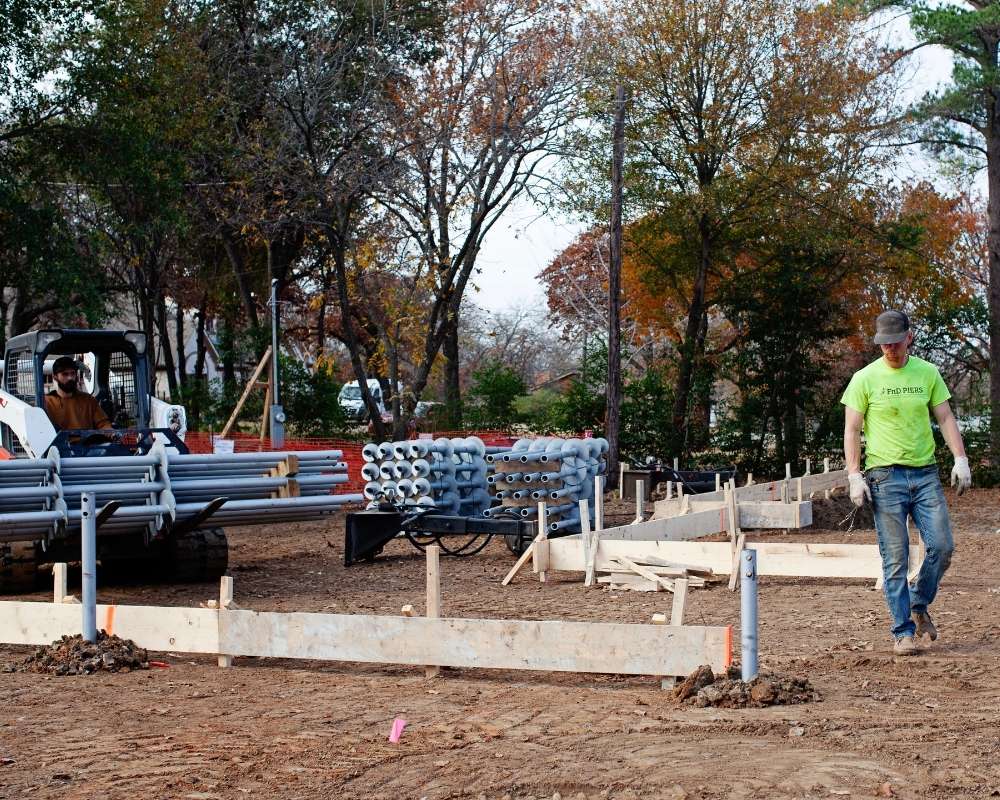
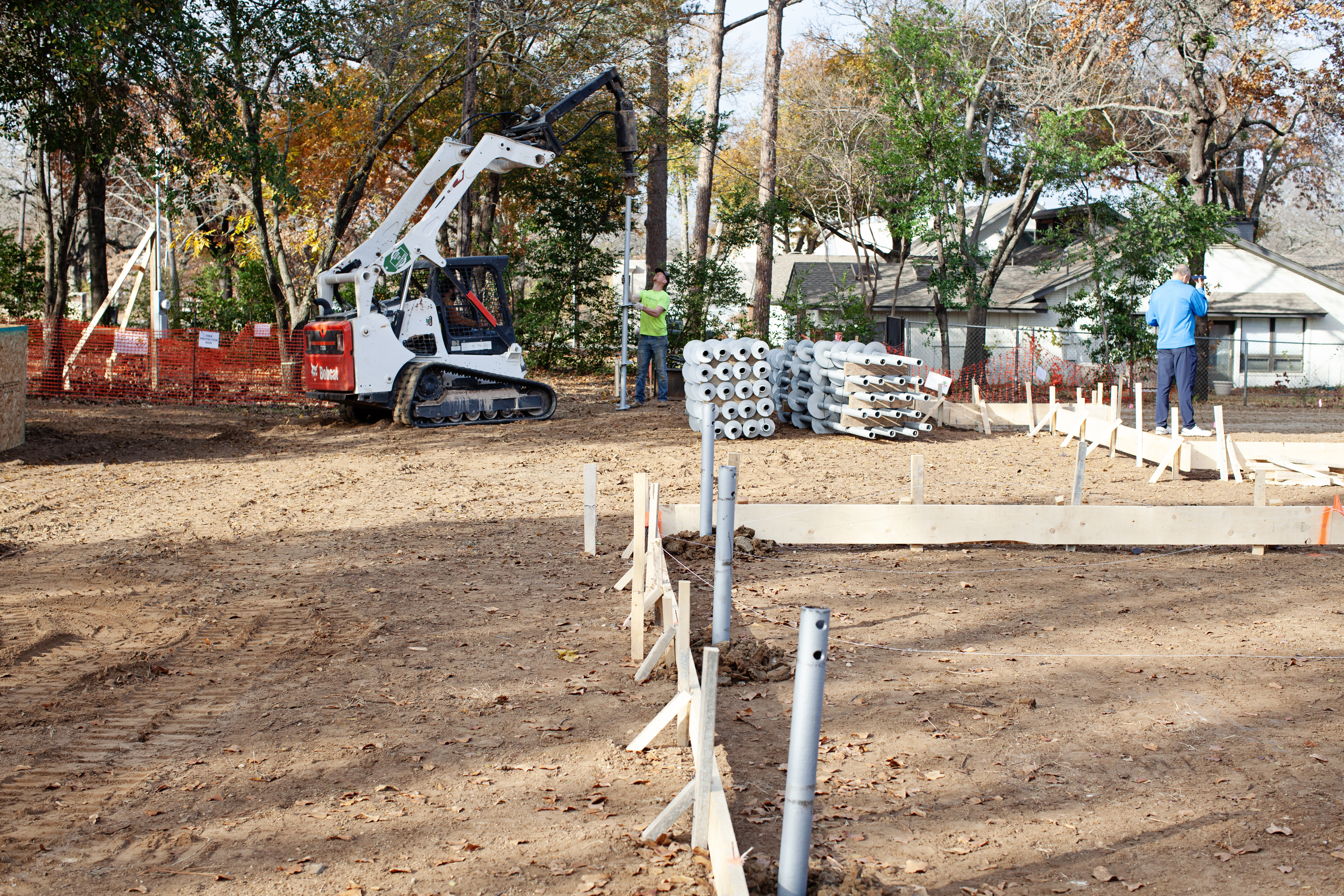
- Anchor Installation: Hydraulic equipment twists the steel anchor into the ground until it reaches competent soil or bedrock.
- Load Transfer: Once in position, the structural load is transferred from the foundation to the anchor system.
This method provides superior load-bearing capacity while maintaining a clean and efficient installation process.
Why Choose Helical Anchors for Your Project?
Helical anchors offer a wide range of advantages over conventional foundation methods:
- Immediate Load Capacity
Helical anchors transfer loads as soon as they are installed. There’s no waiting for concrete to cure, speeding up project timelines significantly. - Minimal Site Disruption
The screw-in installation means no large excavations, reduced soil displacement, and a cleaner site. This makes helical systems ideal for existing structures or properties with landscaping concerns. - Versatility Across Soil Types
Whether encountering clay, sand, or expansive soils, helical anchors adapt to site variability and secure stable support where traditional footings fall short. - Weather-Independent Installation
Unlike poured systems that depend on dry conditions, helical anchors can be installed year-round and in various weather environments without compromising performance. - Cost-Effectiveness Over Time
Helical anchor systems often offer greater cost predictability and lower long-term risk compared to traditional foundation repairs. Their durability and minimal maintenance requirements contribute to long-term savings.
Common Applications of Helical Anchors
Helical anchors are infinitely adaptable for many foundation support needs, including:
- Residential Foundation Support and Repair: Stabilizing homes showing signs of settlement, cracking walls, or uneven floors.
- New Construction Deep Foundations: Providing engineered support where surface soils lack integrity.
- Commercial and Industrial Structures: Supporting heavy loads and large projects with high performance and precision.
- Retaining Walls and Earth Anchoring: Securing slopes and vertical walls against shifting earth forces.
Decks, Signage, and Special Structures: Versatile enough for a wide array of load-bearing needs.
Helical Anchors vs. Traditional Foundation Methods
Compared with concrete footings or straight shaft piers, helical anchors offer distinct advantages in specific soil and project conditions:
- Faster Installation: No cure time or extended construction periods.
- Higher Precision Load Capacity: Torque monitoring provides real-time verification during installation.
- Lower Site Impact: Reduced excavation and clean-up needs.
- Adaptability: Suitable for both tension and compression loads in unstable soils.
Why FND Piers Is Your Trusted Helical Anchor Partner
At FND Piers, we bring decades of industry experience to every foundation project. From in-depth soil analysis and engineered installation to post-installation verification, our team delivers precision and performance. Whether you’re dealing with a settling residential foundation in Arlington, Grapevine, or Grand Prairie, or planning a large commercial build, our helical anchor systems provide stability you can rely on.
Building or Engineering a Project in the Dallas–Fort Worth Area That Requires Deep Foundation Support?
If you are planning or engineering a project in Dallas, Fort Worth, Arlington, Grapevine, Irving, Plano, or surrounding DFW communities, helical anchor systems provide fast, engineered deep foundation support with verified load capacity ideal for North Texas soil conditions. Helical anchors are trusted by DFW engineers, builders, and commercial developers for their:
- Precise load testing during installation
- Speed compared to traditional concrete foundations
- Reliability in expansive clay and variable soil profiles common across North Texas
FND Piers Works Directly With:
- DFW builders and general contractors
- Structural and geotechnical engineers
- Commercial and industrial property owners
Our team understands local soil conditions, permitting expectations, and construction timelines throughout the Dallas–Fort Worth Metroplex. To discuss specifications, load requirements, and installation timelines with a local helical anchor specialist.
CALL US NOW !! (817) 402-7113