Your building’s foundation depends on one critical element that often goes unnoticed: the soil beneath it. When that soil begins to wash away or lose its ability to support the structure, serious foundation problems can develop. Understanding the relationship between soil erosion and foundations is essential for protecting your property and avoiding costly repairs.
At FnD Piers, we help business owners, builders, and property managers identify the warning signs of soil erosion foundations, stabilize damaged structures, and implement long-term solutions that protect their investment.
What Is Soil Erosion Around a Foundation?
Soil erosion is the gradual removal or displacement of soil caused by water, wind, or improper drainage. Around any commercial building, water is by far the most common cause of foundation-related erosion.
When supporting soil is washed away, the foundation can lose the uniform support it was designed to have. This often results in settlement, cracking, and structural movement. Poor drainage, improper grading, overflowing gutters, and plumbing leaks are among the most common contributors to erosion around foundations.
How Soil Erosion Affects Foundations
A foundation is only as strong as the soil supporting it.
As erosion progresses:
- Soil begins to wash away beneath the footing or slab.
- Voids develop beneath portions of the foundation.
- Structural loads become unevenly distributed.
- The foundation begins to settle or shift.
Over time, these changes can create structural damage throughout the building.
Common Causes of Soil Erosion Around Foundations
1. Poor Drainage
Improper drainage is one of the leading causes of foundation erosion.
Common drainage issues include:
- Clogged gutters
- Missing downspout extensions
- Negative grading
- Standing water near the building
- Poorly designed landscaping
When rainwater repeatedly flows toward the foundation instead of away from it, soil gradually washes out from beneath the structure.
2. Heavy Rainfall and Flooding
Large storms can quickly remove supporting soil around a foundation.
Repeated flooding may:
- Undermine footings
- Wash away fill soil
- Create voids beneath slabs
- Accelerate settlement
Buildings located in flood-prone areas should be inspected after significant weather events.
3. Plumbing Leaks
Underground plumbing leaks can silently erode soil beneath the structure.
Even a slow leak can:
- Saturate supporting soils
- Wash away fine particles
- Create underground voids
- Trigger differential settlement
Because these leaks occur below the slab, owners often notice foundation symptoms before discovering the plumbing issue.
4. Improper Yard Grading
The ground surrounding your building should slope away from the foundation.
If it slopes toward the structure, rainwater collects around the perimeter instead of draining away.
Over time, this increases erosion and foundation movement.
5. Overwatering Landscaping
Flower beds, irrigation systems, and excessive watering near the structure can oversaturate foundation soils.
Too much moisture weakens supporting soil and increases erosion over time.
Warning Signs of Foundation Erosion
Soil erosion often develops gradually.
Common warning signs include:
Exterior Signs
- Exposed foundation
- Soil pulling away from the slab
- Washouts near the structure
- Standing water after rain
- Sinkholes or depressions
Interior Signs
- Wall cracks
- Ceiling cracks
- Uneven floors
- Doors sticking
- Windows difficult to open
- Gaps between walls and trim
These symptoms may indicate that erosion has already begun affecting structural support.
Can Soil Erosion Cause Foundation Settlement?
Yes.
When soil washes away beneath portions of the foundation, those areas lose support.
This often leads to:
- Differential settlement
- Slab movement
- Foundation cracking
- Structural distortion
Unlike uniform settlement, differential settlement causes one section of the building to move differently than another, creating the most noticeable structural damage.
How to Prevent Soil Erosion Around Your Foundation
Preventive maintenance is one of the most effective ways to reduce erosion risk.
Maintain Gutters and Downspouts
Ensure gutters remain clean and direct water several feet away from the building.
Improve Drainage
Consider drainage improvements such as:
- French drains
- Surface drains
- Downspout extensions
- Swales
- Proper grading
Managing surface water is one of the best defenses against erosion.
Repair Plumbing Leaks Promptly
Hidden plumbing leaks should never be ignored.
Early repairs can prevent significant soil loss beneath the foundation.
Monitor Soil Moisture
In areas with expansive clay soils, maintaining relatively consistent soil moisture helps reduce excessive shrink-swell cycles that contribute to foundation movement.
How Helical Piers Help Repair Foundations Damaged by Soil Erosion
If erosion has already caused foundation settlement, repairing drainage alone may not fully restore structural stability.
In many cases, helical piers provide an effective long-term solution.
How Helical Piers Work
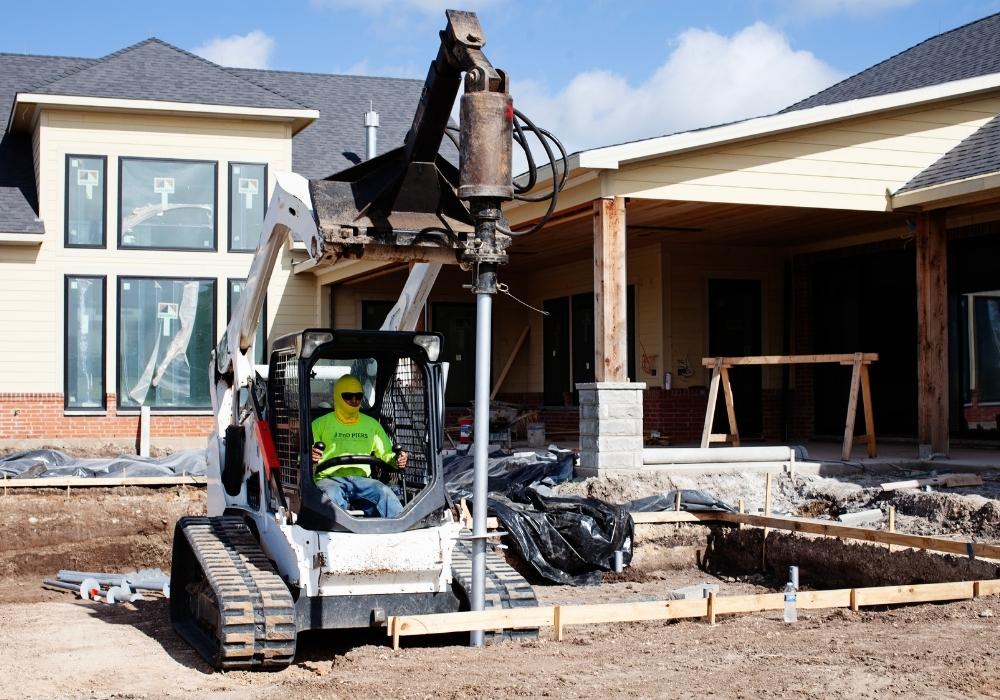
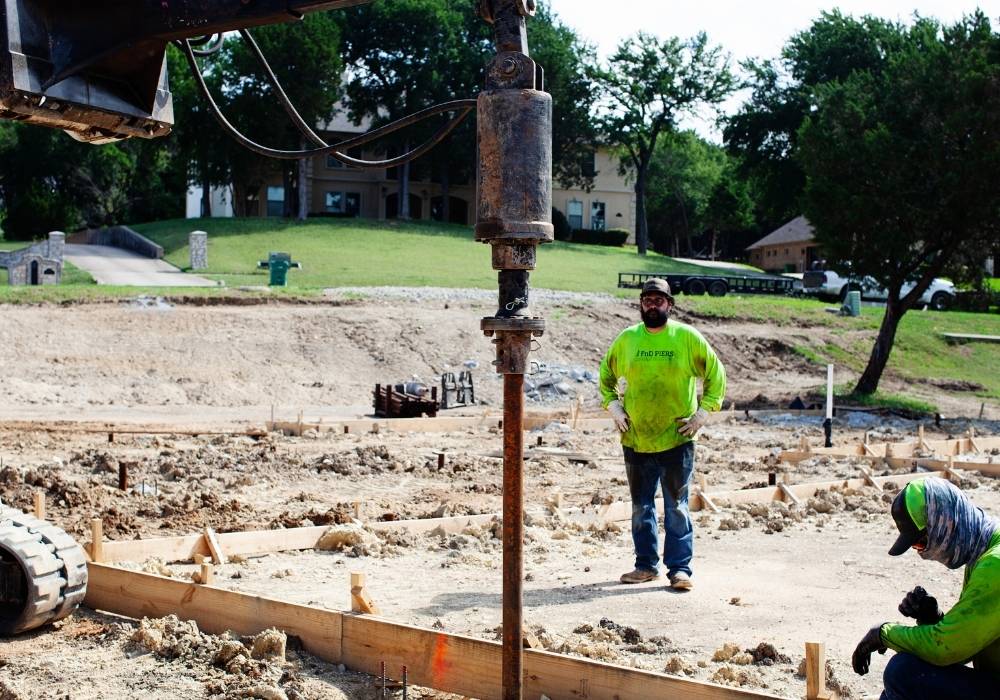
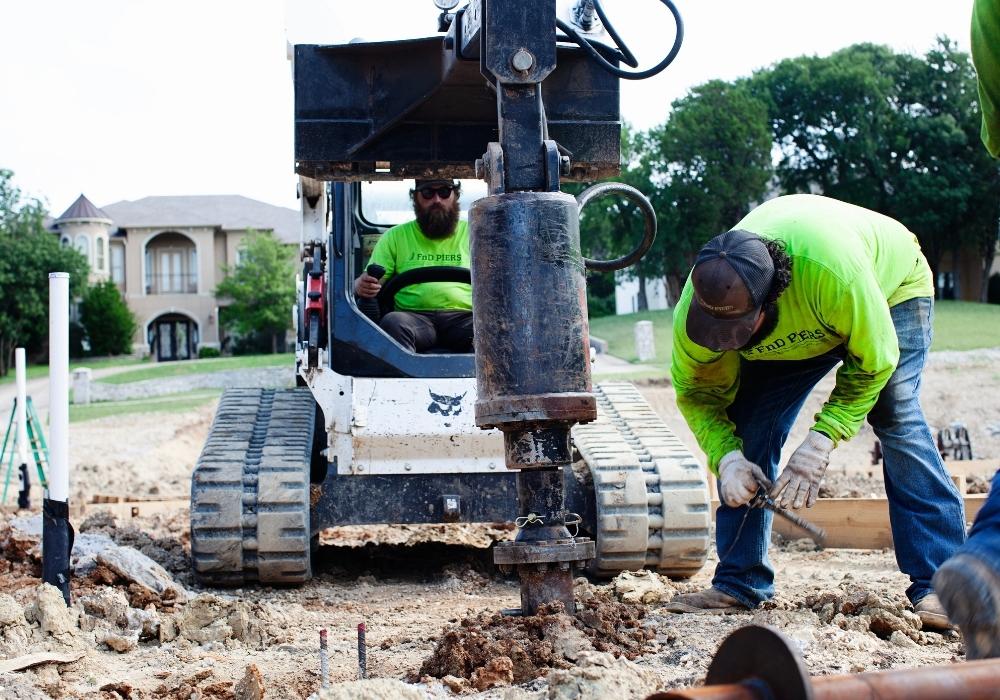
Helical piers are steel shafts with helical bearing plates that are mechanically advanced into the ground until they reach competent load-bearing soil.
Rather than relying on weakened surface soils, they transfer the building’s weight to deeper, more stable strata.
Benefits include:
- Long-term foundation stabilization
- Reduced future settlement
- Minimal excavation
- Immediate load-bearing capacity
- Reliable performance in poor soil conditions
When Should You Schedule a Foundation Inspection?
Consider a professional evaluation if you notice:
- Large soil washouts
- Foundation cracks
- Uneven floors
- Doors or windows sticking
- Visible settlement
- Persistent standing water near the foundation
Early intervention often prevents more extensive structural damage and reduces repair costs.
Why Choose FnD Piers?
At FnD Piers, we understand that every foundation problem begins below the surface.
We provide:
- Professional foundation inspections
- Helical pier installation
- Foundation stabilization
- Settlement repair
- Deep foundation solutions
- Engineered support systems
Our team evaluates both the foundation and the soil conditions that affect its long-term performance, allowing us to recommend solutions designed to last.
Final Thoughts: Protect Your Foundation from Soil Erosion
Soil erosion is one of the most common and most overlooked causes of foundation damage.
Fortunately, many erosion-related problems can be prevented through proper drainage, routine maintenance, and early inspections. When erosion has already caused settlement, engineered solutions such as helical piers can restore stability by transferring structural loads to competent soil below the eroded zone.
Protecting the soil beneath your building is one of the best ways to protect the structure itself.
Frequently Asked Questions
Can soil erosion really damage my foundation?
Yes. If erosion removes or weakens the soil supporting your foundation, it can lead to settlement, cracking, and structural movement.
How do I know if erosion is occurring around my building?
Common signs include exposed foundation walls, soil washouts, standing water, cracks in walls or floors, and uneven or sloping floors.
Will filling eroded areas with soil fix the problem?
Adding soil may improve surface grading, but it usually does not address foundation settlement or voids beneath the structure. If movement has already occurred, a professional evaluation is recommended to determine whether stabilization is needed.
Concerned that soil erosion may be affecting your foundation?
Contact FnD Piers today to schedule a professional foundation evaluation. Our experienced team can identify the source of the problem and recommend engineered solutions that protect your property with long-term stability.
Call: (817) 402-7113 Today.