If you are researching alternatives to concrete foundations, you may encounter two similar terms: ground screws and screw piles.
Both are steel foundation products that are rotated into the ground, but they are not necessarily the same in design, capacity, or intended application.
Understanding the difference between ground screw and screw pile can help property owners, builders, contractors, and engineers choose the appropriate foundation system for a project.
At FnD Piers, we specialize in engineered screw piles, also called helical piles or helical piers, for commercial and new construction foundation applications
What Is a Ground Screw?
A ground screw is typically a steel tube with a pointed end and a continuous or near-continuous thread that allows it to be screwed into the soil.
Think of it as a large version of a wood screw designed for the ground.
Ground screws are generally shorter and commonly used to support relatively light structures such as:
- Fences
- Gates
- Signs
- Small decks
- Solar panel systems
- Lightweight accessory structures
Depending on the product and application, ground screws may be installed manually or using mechanical equipment.
Their relatively simple installation can make them useful when a project needs an alternative to digging holes and pouring concrete.
What Is a Screw Pile?
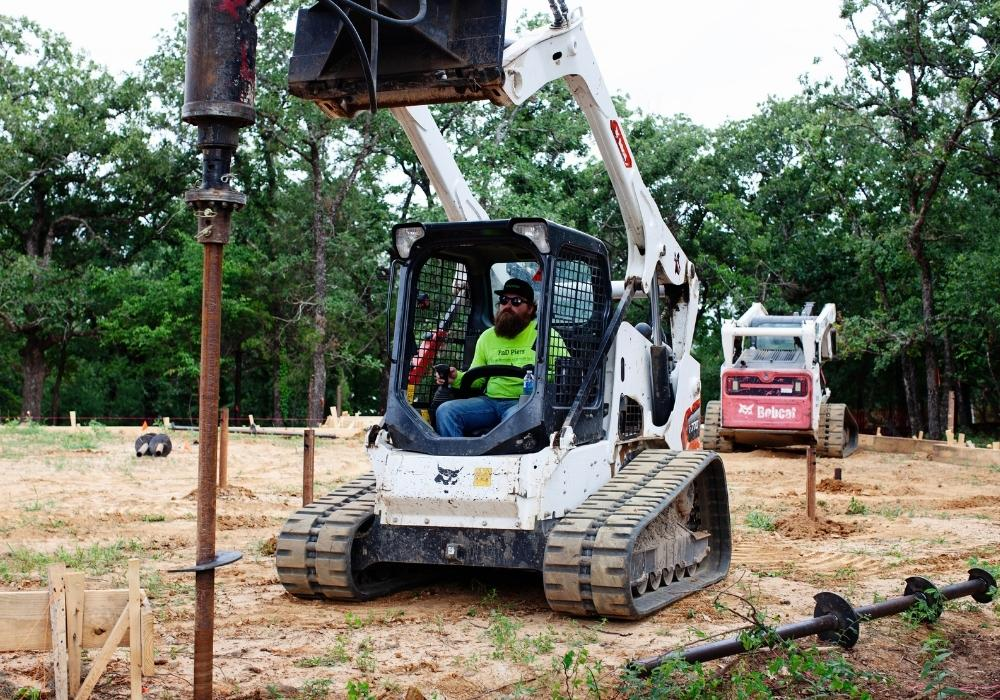
A screw pile, commonly called a helical pile or helical pier, is an engineered deep foundation element.
Rather than having continuous threads along most of the shaft, a typical screw pile consists of a steel shaft with one or more larger helical bearing plates welded to it.
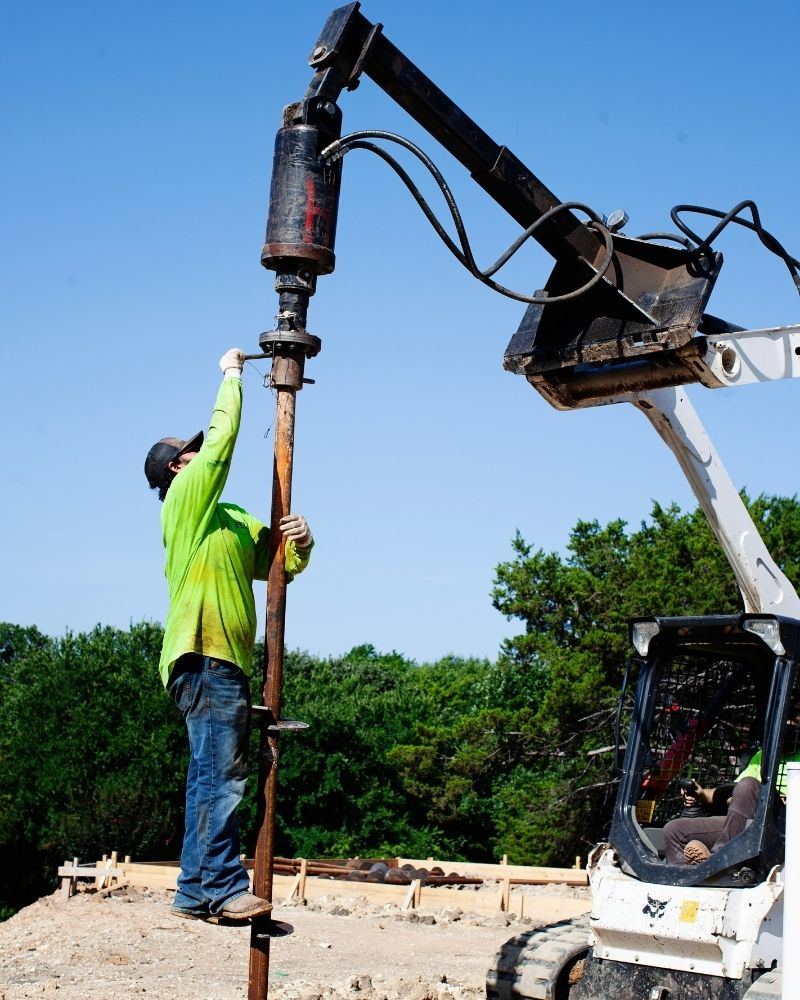
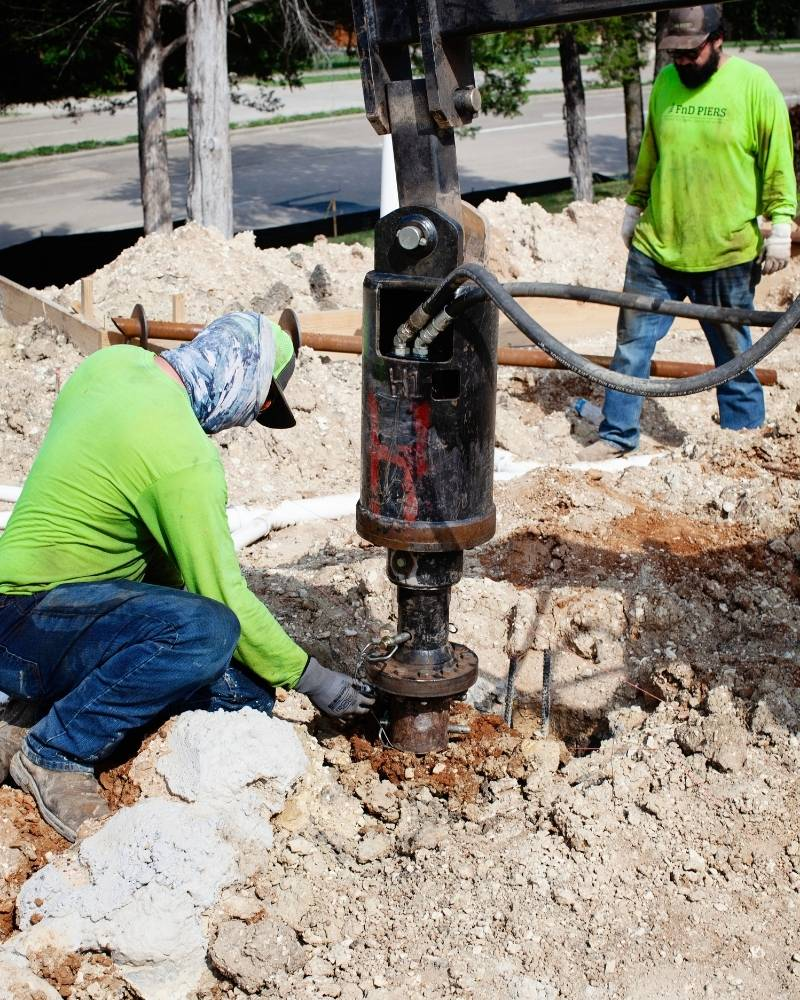
Hydraulic equipment rotates the pile into the soil. Additional shaft extensions can be added when necessary to reach the required depth and suitable bearing conditions.
Screw piles can be designed for substantially more demanding structural applications, including:
- Light-frame foundations
- Commercial buildings
- Foundation underpinning
- Building additions
- Decks and porches
- Retaining structures
- Industrial structures
- Equipment foundations
The installation torque can also be monitored as part of verifying that the pile meets the engineered installation requirements.
What Is the Difference Between Ground Screw and Screw Pile?
The primary difference is their design and intended structural application.
Factor | Ground Screw | Screw Pile |
|---|---|---|
Design | Often continuous threaded shaft | Shaft with one or more helical plates |
Typical Application | Lighter structures | Engineered structural foundations |
Depth | Generally shallower | Can use extensions to reach required bearing soils |
Installation | Manual or mechanical | Hydraulic installation equipment |
Capacity | Generally suited to lighter loads | Can be engineered for significant structural loads |
Verification | Product/application dependent | Installation torque can be monitored |
Common Uses | Fences, signs, light structures | New construction, commercial buildings, underpinning |
The exact capabilities depend on the specific product, soil, loads, engineering, and manufacturer specifications.
Ground Screw vs. Screw Pile Design
The physical design is one of the easiest ways to understand the difference.
A ground screw usually has a pointed end with threads extending along much of its body. Its shape helps the screw penetrate the ground as it rotates.
A screw pile generally uses one or more larger helical plates positioned along a steel shaft. These helices help advance the pile while also functioning as bearing elements within the soil.
Additional extensions allow a screw pile to continue deeper when competent bearing soil is not available near the surface.
This makes engineered screw piles particularly useful when weak or unstable surface soils cannot adequately support the proposed structure.
Which Is Better for Structural Foundations?
For substantial structural foundation applications, an engineered screw pile system offers capabilities that a light-duty ground screw may not provide.
Structural foundations must account for factors such as:
- Compression loads
- Uplift or tension loads
- Lateral forces
- Soil conditions
- Required bearing capacity
- Corrosion considerations
- Structural connections
This is why choosing a foundation product should not be based simply on whether it can be screwed into the ground.
The foundation must be designed and installed to support the actual structural loads of the project.
Benefits of Screw Piles for Foundation Construction
When properly designed and installed, screw piles can offer several construction advantages.
Fast Installation
Screw piles are mechanically rotated into the ground and do not require the concrete curing time associated with many conventional foundations.
Minimal Excavation
Installation generally creates little soil spoil compared with drilled shafts or excavated concrete footings.
Immediate Capacity
Once properly installed and structurally connected, the steel pile itself does not require curing before accepting load.
Installation Verification
Torque can be monitored during installation and used as part of confirming that the required installation criteria have been achieved.
Limited-Access Installation
Relatively compact hydraulic equipment can make screw piles useful on sites where access for larger foundation equipment is difficult.
Ground Screw or Screw Pile: Which Should You Choose?
The decision should start with the structure and required loads, not the name of the product.
A ground screw may be appropriate for certain lightweight applications where the loads and site conditions fit the product’s specifications.
An engineered screw pile may be more appropriate when the project involves:
- Significant structural loads
- Weak near-surface soils
- Foundation settlement
- Commercial construction
- Light-frame foundations
- Engineered load requirements
- Deeper load transfer
For structural applications, the foundation should be selected based on engineering requirements, soil conditions, and required capacity.
Why Choose FnD Piers for Screw Piles?
FnD Piers manufactures and installs engineered helical piles and screw piles for commercial and new construction foundation work.
We work with:
- Structural engineers
- Geotechnical engineers
- General contractors
- Builders
- Developers
- Property owners
FnD’s helical systems are installed hydraulically to specified depths and torque requirements, allowing the foundation solution to be matched to project loads and soil conditions.
The goal is not simply to put steel into the ground.
The goal is to provide an engineered foundation capable of supporting the structure.
Frequently Asked Questions
Are ground screws and screw piles the same?
Not necessarily. Although the terms are sometimes used loosely or interchangeably, a ground screw commonly has continuous threading and is used for lighter applications, while an engineered screw or helical pile typically has one or more larger helical plates and can be designed for substantial structural loads.
Is a screw pile the same as a helical pile?
Yes. Screw pile, helical pile, and helical pier are commonly used terms for the same general deep-foundation technology. FnD also uses these terms across its foundation resources.
Can screw piles support a building?
Engineered screw piles can be used for building foundations when properly designed for the structural loads and site conditions.
Do screw piles require concrete?
The steel screw pile itself does not require concrete to develop its capacity, although concrete may still be incorporated into other portions of the foundation design.
Final Thoughts
The difference between ground screw and screw pile comes down primarily to design, capacity, installation, and intended application.
Ground screws can provide an efficient foundation solution for certain lightweight structures.
Engineered screw piles are designed for applications requiring greater structural capacity, deeper load transfer, and verifiable installation criteria.
Before choosing either option, ask the most important question:
What foundation system is engineered to safely support this structure in these soil conditions?
Need an Engineered Screw Pile Foundation?
Contact FnD Piers to discuss your project.
Whether you’re planning new construction, a commercial build, or a stabilization project, our team can work with your engineers and contractors to determine whether screw piles provide the right combination of capacity, speed, constructability, and long-term support.
Call: (817) 402-7113 Today