Choosing the right deep foundation system can affect everything from structural performance and construction cost to schedule, equipment requirements, and jobsite disruption. Two options contractors, engineers, and developers may consider are auger piles vs helical piers.
Both systems transfer structural loads into the ground, but they accomplish that goal very differently. Auger piles typically involve drilling and placing concrete, while helical piers use manufactured steel shafts with helical bearing plates that are mechanically rotated into the soil.
At FnD Piers, we manufacture and install engineered helical pier systems for commercial and new construction projects. Understanding the differences between these foundation systems can help project teams determine which solution provides the best combination of capacity, constructability, schedule, and value.
What Are Auger Piles?
Auger piles are deep foundation elements created by drilling into the ground with an auger and forming a concrete pile in the resulting bore. Depending on the specific system, reinforcement may also be incorporated into the pile.
Auger-based foundation systems can be appropriate for:
- Commercial buildings
- Industrial projects
- Large structures
- Sites with suitable soil conditions
- Projects where concrete deep foundations are specified
Because the pile is formed in the ground, installation typically requires drilling equipment, concrete delivery, and management of the construction sequence.
What Are Helical Piers?
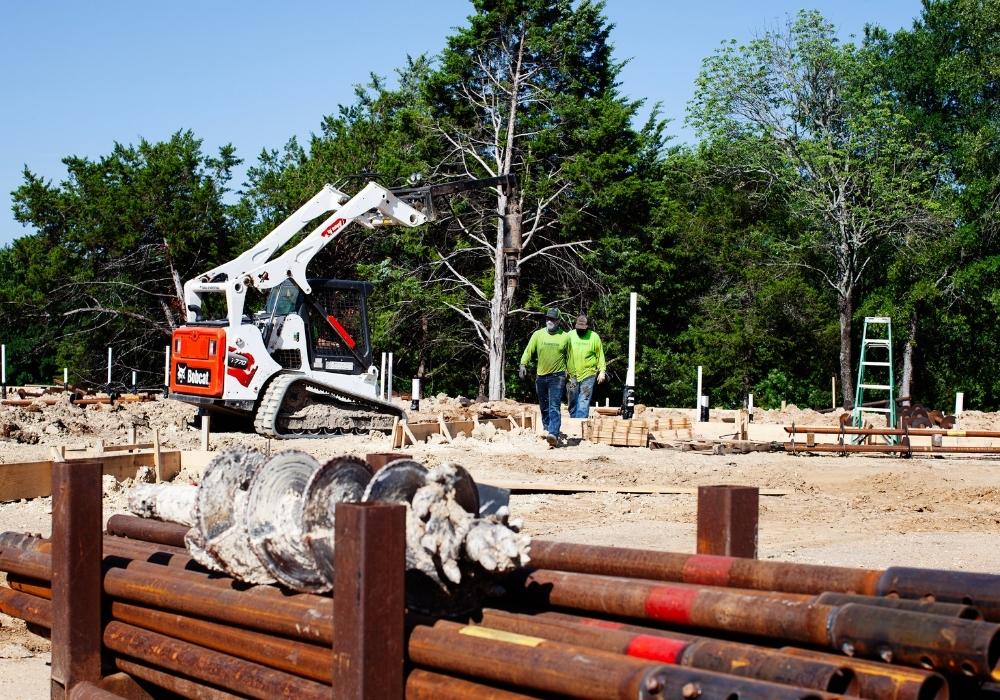
Helical piers, also known as helical piles or screw piles, are manufactured steel foundation elements consisting of a central shaft with one or more helical bearing plates.
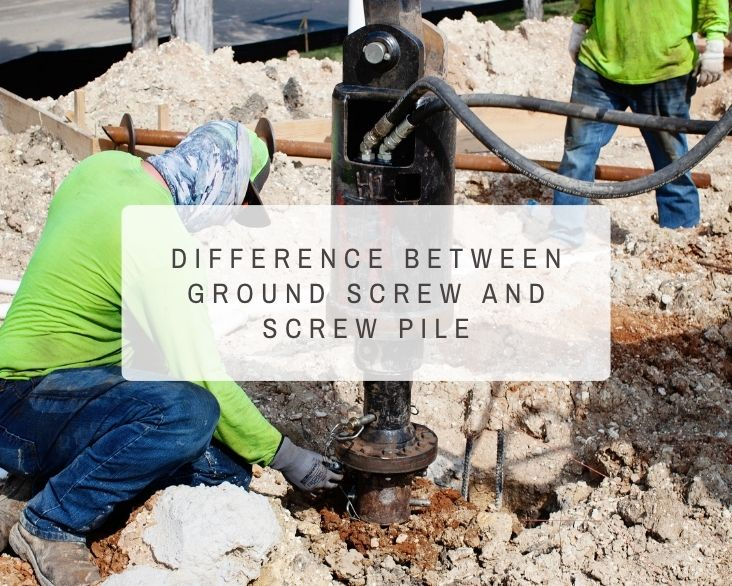
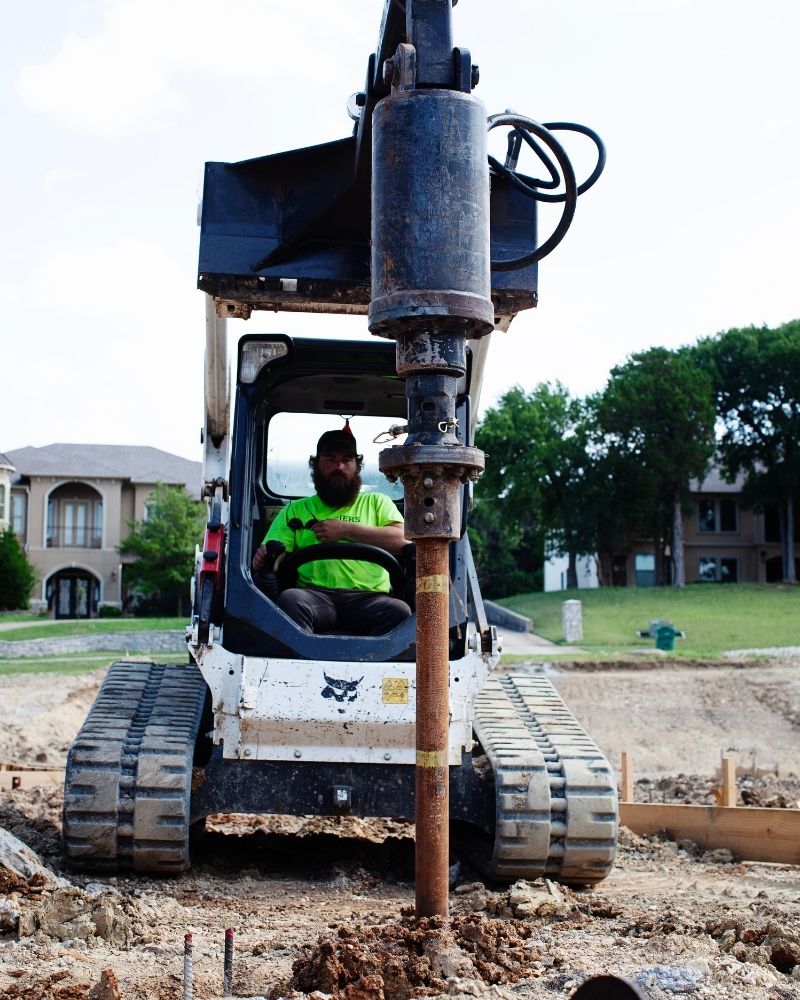
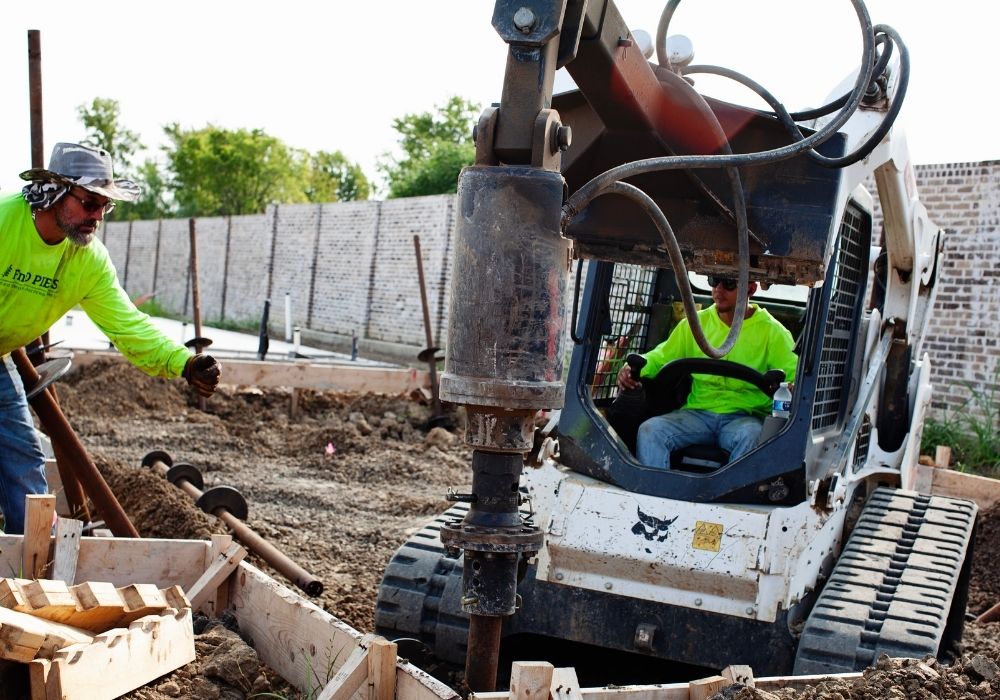
Instead of drilling a hole and filling it with concrete, a hydraulic drive head rotates the helical pier directly into the soil.
The pier is advanced until the engineered depth and installation criteria are achieved. FnD Piers describes its helical systems as hydraulically installed into stable bearing soils, with immediate load-bearing capability and adaptability across challenging soil conditions.
Helical piers can be used for:
- New construction
- Commercial foundations
- Light-frame foundations
- Foundation underpinning
- Building additions
- Retaining structures
- Limited-access projects
- Foundation stabilization
Auger Piles vs Helical Piers: What's the Difference?
The most important difference is the installation method.
With an auger pile, soil is drilled or augered and a concrete foundation element is created in the ground.
With a helical pier, a prefabricated steel foundation element is rotated directly into the soil.
That distinction affects excavation, spoils, equipment, construction speed, site disturbance, and when the foundation can accept structural loads.
Factor | Auger Piles | Helical Piers |
Primary Material | Concrete, often with reinforcement | Steel |
Installation | Drilled/augered and formed in place | Mechanically rotated into soil |
Excavated Spoils | May be generated | Minimal |
Concrete Required | Yes | No for the pier itself |
Cure Time | May be required | None |
Load Readiness | Depends on concrete/design requirements | Immediate after installation |
Installation Vibration | Generally low | Generally low |
Limited Access | Can be challenging | Often advantageous |
Installation Verification | Project-specific testing/QA | Installation torque can be used as part of capacity verification |
Removal | Difficult | Potentially removable in suitable applications |
The appropriate system still depends on the project’s engineering requirements, geotechnical conditions, loads, access, and specifications.
1. Installation Speed
One of the most significant differences when comparing auger piles vs helical piers is construction speed.
Auger pile installation can involve multiple operations, including:
- Mobilizing drilling equipment
- Drilling the pile location
- Managing excavated material where applicable
- Placing reinforcement when required
- Placing concrete
- Allowing the concrete to develop required strength
Helical pier installation eliminates several of those operations.
The pier is mechanically advanced into the ground, extensions are added when necessary, and the foundation element can accept structural load immediately after installation. FnD Piers identifies immediate load-bearing capacity as one of the primary advantages of its helical systems.
For projects where schedule is critical, that difference can be significant.
2. Excavation and Soil Spoils
Drilling creates another consideration: what happens to the displaced or excavated soil?
Depending on the auger system and site conditions, soil may need to be:
- Stockpiled
- Handled
- Transported
- Disposed of
That can increase trucking, labor, cleanup, and logistics.
Helical piers are displacement-type elements installed by rotation and generally create very little spoil compared with drilled systems. The reference comparison specifically identifies reduced excavation, less soil disruption, and no augered spoils as advantages of helical piles.
This can be particularly valuable on congested commercial sites.
3. Equipment and Site Access
Large drilling equipment requires adequate access, working room, and overhead clearance.
That can create challenges when working:
- Inside existing buildings
- Near property lines
- Around existing utilities
- Adjacent to occupied structures
- In developed urban sites
- On sites with restricted equipment access
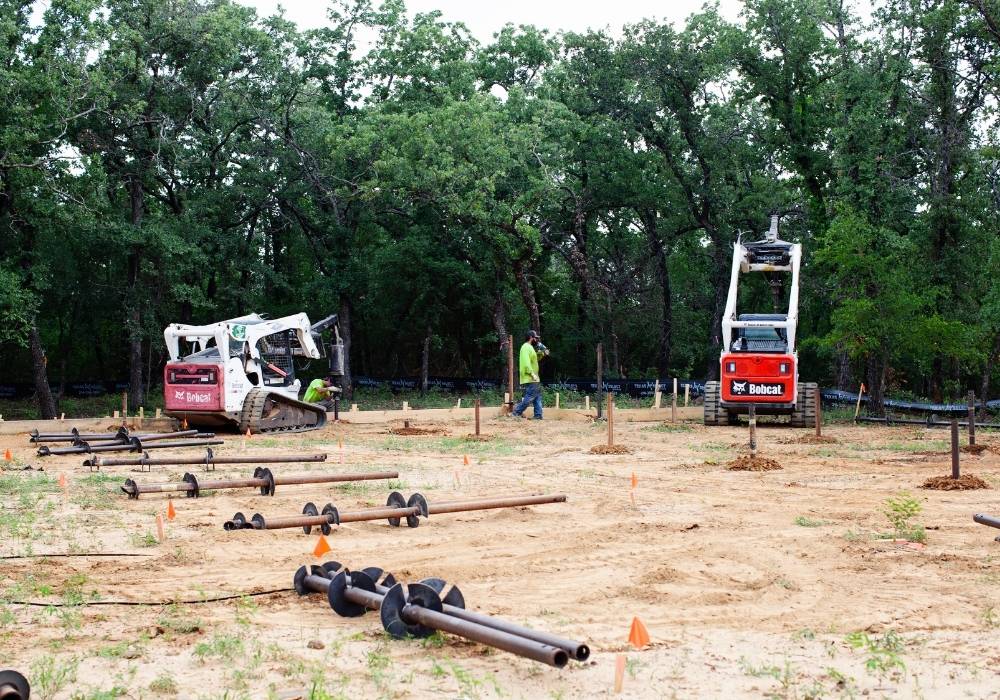
Helical piers can often be installed with smaller hydraulic equipment, making them particularly useful for retrofit and limited-access projects. FnD Piers uses its own rigs and installation crews and highlights helical installation as an option where minimizing jobsite disruption matters.
4. Immediate Load-Bearing Capacity
Concrete requires time to develop specified strength.
Helical piers do not rely on concrete curing for the pile itself.
Once the pier has been properly installed and connected according to the engineered design, it can accept load immediately.
That can help contractors move directly into the next phase of construction instead of building cure time into the schedule.
5. Installation in Challenging Soil Conditions
Soil conditions are one of the most important considerations in any deep foundation decision.
Auger piles can perform effectively in many soil profiles, but drilling can become more complicated when projects encounter conditions such as groundwater or unstable bore conditions.
Helical piers instead advance through the soil until the required installation criteria are reached. FnD Piers specifically notes their adaptability in challenging soil conditions and their ability to avoid some groundwater-intrusion and soil-collapse issues associated with traditional excavated foundation methods.
However, neither system should be selected solely by rule of thumb. Geotechnical information and structural loads should drive the final design.
6. Quality Control and Installation Verification
Another important difference between auger piles and helical piers involves how installation performance can be monitored.
Helical pier installation torque provides useful real-time information during installation. The installer can monitor torque as the pier advances, and the project engineer can use the specified relationship between torque and capacity as part of the foundation’s verification process.
FnD Piers installs its helical systems to engineered depth and capacity and works with structural engineers and inspectors during the process.
That gives project teams valuable installation data before the pier disappears beneath the completed structure.
7. Weather and Construction Scheduling
Concrete operations can be affected by:
- Temperature
- Rain
- Site conditions
- Concrete delivery
- Placement logistics
Helical pier installation does not require concrete placement for the pier itself.
This can make scheduling more predictable, especially when contractors are working against aggressive deadlines.
The GoliathTech comparison also identifies broader weather flexibility as an advantage of helical systems over auger piles.
8. Environmental and Jobsite Impact
Foundation construction doesn’t occur in isolation.
Project teams may need to protect:
- Existing landscaping
- Adjacent buildings
- Pavement
- Sensitive areas
- Active operations
Because helical piers typically require less excavation and generate fewer spoils, they can reduce the physical footprint of foundation installation.
This makes them particularly attractive for retrofit projects and developed sites where minimizing disruption has measurable value.
Auger Piles vs Helical Piers: Which Costs Less?
There is no universal answer.
The installed foundation cost depends on:
- Number of piles
- Required capacity
- Installation depth
- Soil conditions
- Mobilization
- Equipment
- Concrete requirements
- Site access
- Labor
- Spoil disposal
- Construction schedule
Comparing only the price per pile can therefore be misleading.
A more useful question is:
Which foundation system produces the required engineered performance at the lowest total installed project cost and risk?
For some projects, auger piles may provide the better solution.
For others, the reduced excavation, faster installation, immediate loading, and simpler site logistics of helical piers may create substantial overall savings.
When Should You Consider Auger Piles?
Auger piles may be appropriate when:
- They are already incorporated into the engineered design
- Site access readily accommodates drilling equipment
- Soil conditions favor drilled construction
- High pile quantities justify mobilization
- Concrete foundation systems integrate efficiently with the structure
The correct solution should always be determined by engineering requirements rather than assuming one foundation type is universally superior.
When Should You Consider Helical Piers?
Helical piers deserve serious consideration when the project requires:
- Fast installation
- Immediate loading
- Limited excavation
- Minimal spoils
- Restricted site access
- Low vibration
- Foundation retrofit or underpinning
- Installation around existing structures
- Adaptability to challenging soil conditions
They can also be particularly valuable when schedule delays carry substantial financial consequences.
Can Helical Piers Replace Auger Piles?
In some projects, yes, but only after engineering review.
If auger piles are originally specified, a helical pier contractor may be able to work with the structural and geotechnical engineers to determine whether a helical alternative can satisfy the required:
- Compression capacity
- Tension or uplift capacity
- Lateral requirements
- Settlement criteria
- Corrosion requirements
- Safety factors
- Building-code requirements
This is where value engineering becomes especially important.
Instead of simply asking, “What foundation was specified?”, the project team can also ask:
“Is there another engineered foundation system that achieves the required performance with less time, cost, or construction risk?”
Why Helical Piers Can Be a Powerful Value-Engineering Alternative
Helical piers can provide value beyond the cost of the foundation element itself.
Consider the potential impact of eliminating or reducing:
- Excavation
- Spoil removal
- Concrete deliveries
- Cure time
- Large-equipment mobilization
- Schedule delays
- Site restoration
Those secondary costs can materially affect the economics of a project.
For contractors and developers, the best foundation isn’t necessarily the one with the lowest material cost. It’s the one that helps deliver the required performance while improving the total project outcome
Why Choose FnD Piers?
FnD Piers manufactures, sells, and installs helical piers for commercial, industrial, and new construction projects. The company manufactures its helical piles in-house in Texas, uses its own field crews and rigs, and coordinates with engineers and inspectors rather than separating manufacturing and installation among unrelated parties.
FnD Piers provides:
- In-house helical pier manufacturing
- Engineered helical pier installation
- Commercial deep foundation solutions
- Foundation underpinning and stabilization
- Installation torque verification
- Collaboration with structural engineers
- Value-engineering support
That integrated approach allows the team manufacturing the foundation system to remain accountable through installation.
Final Thoughts: Choosing Between Auger Piles and Helical Piers
When comparing auger piles vs helical piers, both can provide effective deep foundation support when properly engineered and installed.
The better choice depends on the project.
Auger piles may be appropriate for projects where drilled concrete foundations align well with the soil, structural design, equipment access, and construction sequence.
Helical piers can provide compelling advantages when the project prioritizes:
- Faster installation
- Immediate loading
- Reduced excavation
- Fewer spoils
- Smaller installation equipment
- Minimal site disruption
- Flexible installation
Before automatically proceeding with a conventional foundation design, contractors, engineers, and developers should evaluate the total installed cost, schedule impact, constructability, and project risk of each alternative.
The right foundation system isn’t simply the one that works.
It’s the one engineered to work most efficiently for your project.
Frequently Asked Questions
What is the main difference between auger piles and helical piers?
Auger piles are generally constructed by drilling into the soil and creating a concrete pile in the resulting bore. Helical piers are prefabricated steel foundation elements mechanically rotated into the ground.
Are helical piers faster to install than auger piles?
They can be. Helical piers eliminate several operations associated with drilled concrete foundations and do not require concrete cure time before the pier itself can accept load.
Do helical piers create excavation spoils?
Helical pier installation generally produces minimal soil spoils compared with augered foundation systems because the pile is rotated directly into the soil rather than installed in a drilled excavation.
Are helical piers good for limited-access projects?
Yes. Their hydraulic installation and comparatively compact equipment can make helical piers particularly useful for existing buildings, additions, retrofits, and other constrained jobsites.
Can helical piers replace auger piles on a commercial project?
Potentially. The structural engineer must determine whether the proposed helical pier system satisfies the project’s load, soil, settlement, code, and other design requirements. A qualified helical pier specialist can work with the engineering team to evaluate the alternative.
How is helical pier capacity verified?
Installation torque is monitored as a helical pier advances into the ground and can be correlated with capacity according to the engineered system and project specifications. FnD Piers installs its systems to engineered depth and capacity in coordination with engineers and inspectors.
Need an Alternative to Auger Piles?
If your plans specify auger piles or you’re still evaluating the best deep foundation system, contact FnD Piers before construction begins.
Our team can work with your engineer to evaluate whether an engineered helical pier solution could help reduce excavation, accelerate installation, simplify site logistics, and lower total project risk.