A cracked or leaning chimney may look like an isolated masonry problem, but in many cases it can be a warning sign of something more serious beneath your home. Cracked chimney foundation problems often develop when the soil supporting the chimney or house shifts, settles, expands, or loses strength.
Because chimneys are heavy structures, even relatively small changes in soil support can cause visible movement. Cracks in the brick, gaps between the chimney and the house, or a noticeable lean should never be ignored.
At FnD Piers, we help homeowners identify the cause of foundation movement and provide engineered stabilization solutions designed to protect the structure for the long term.
What Causes Cracked Chimney Foundation Problems?
A chimney depends on a properly designed footing and stable supporting soil. When either becomes compromised, the chimney may begin to settle or move independently from the rest of the home.
Common causes include:
- Expansive clay soil
- Poor drainage
- Foundation settlement
- Soil erosion
- Drought and soil shrinkage
- Plumbing leaks
- Improperly designed or undersized footings
Understanding the cause is critical because repairing the visible crack alone does not solve the underlying foundation problem.
Why Chimneys Are Vulnerable to Foundation Movement
Chimneys are extremely heavy because they are commonly constructed from brick, masonry block, stone, and other dense materials.
That weight is concentrated over a relatively small foundation area.
If the soil beneath the chimney loses strength or shifts unevenly, the chimney may:
- Settle
- Rotate
- Pull away from the house
- Crack
- Lean outward
In some cases, the chimney moves independently while the rest of the foundation remains relatively stable.
Common Signs of Cracked Chimney Foundation Problems
1. Cracks in Chimney Brick or Mortar
Cracks may appear:
- Horizontally
- Vertically
- In a stair-step pattern
Stair-step cracking through masonry joints is particularly important to evaluate because it can indicate structural movement.
2. Chimney Pulling Away From the House
One of the most obvious warning signs is a visible gap between the chimney and the exterior wall.
You may notice:
- Separation near the roofline
- Gaps along siding
- Open joints between masonry and framing
This may indicate that the chimney footing is settling independently from the house.
3. A Leaning Chimney
A visibly tilting chimney requires prompt attention.
Even a small lean can signal:
- Soil instability
- Footing settlement
- Erosion
- Differential foundation movement
Because chimneys are heavy, continued movement can create a safety risk.
4. Interior Fireplace Cracks
Foundation movement may also appear inside the home.
Look for:
- Cracks around the fireplace
- Separation between fireplace masonry and walls
- Cracked hearths
- Gaps around trim
These symptoms may indicate that the chimney structure is shifting.
Expansive Clay Soil and Chimney Problems
In areas with expansive clay soils, moisture changes can have a major impact on foundation performance.
Clay soil expands when it absorbs water and contracts as it dries.
This movement can create repeated pressure beneath the chimney footing.
During wet periods:
- Clay expands
- Upward pressure increases
- The footing may heave
During drought:
- Clay contracts
- Supporting soil pulls away
- The chimney may settle
Over time, these cycles can create cracks and structural movement.
Poor Drainage Can Make the Problem Worse
Water management around the home is one of the most important factors affecting foundation stability.
Common drainage problems include:
- Clogged gutters
- Short downspouts
- Negative grading
- Standing water
- Poor landscaping drainage
If water continually collects near the chimney footing, the soil can become oversaturated and lose load-bearing strength.
Improving drainage may help reduce future movement, but if settlement has already occurred, structural stabilization may still be required.
Soil Erosion and Chimney Settlement
Water can also physically remove supporting soil.
Heavy rainfall, runoff, damaged drainage systems, and plumbing leaks may create erosion beneath or around a chimney footing.
As soil washes away:
- Voids develop
- Support becomes uneven
- The footing settles
- Cracks begin to form
Simply filling visible gaps with soil does not necessarily restore proper structural support.
Is a Cracked Chimney Always a Foundation Problem?
No.
Some chimney cracks may result from:
- Normal masonry deterioration
- Thermal expansion
- Weather exposure
- Mortar failure
However, cracks should be evaluated when they appear alongside other signs of movement such as:
- Uneven floors
- Sticking doors
- Drywall cracks
- Foundation cracks
- Exterior brick separation
- Chimney leaning
The combination of symptoms can help determine whether the issue is cosmetic or structural.
Can a Cracked Chimney Be Repaired?
Yes, but the correct repair depends on the cause.
If the damage is purely masonry-related, tuckpointing or brick repair may be appropriate.
If foundation settlement is responsible, however, repairing the masonry before stabilizing the footing may only create a temporary cosmetic fix.
The underlying movement should be corrected first.
How Helical Piers Can Stabilize a Settling Chimney
When unstable soil is causing the chimney footing to settle, helical piers may provide an effective long-term solution.
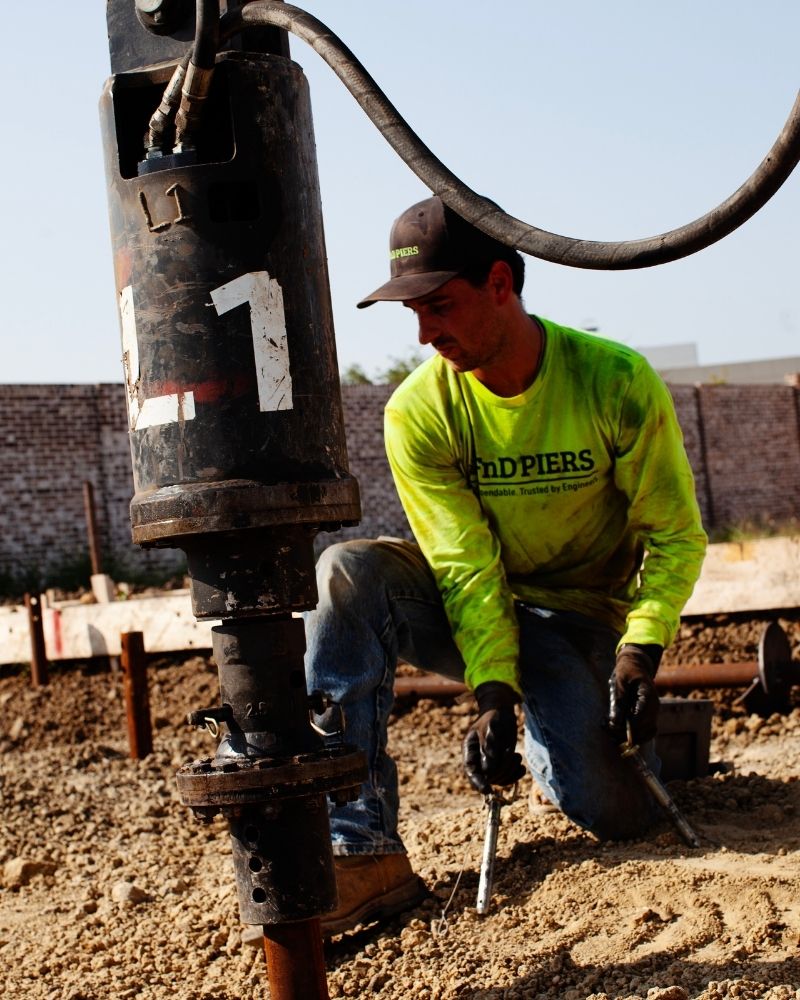
Helical piers are steel foundation elements with helical plates that are mechanically advanced into the ground until they reach competent load-bearing soil.
Once installed, they can transfer the weight of the chimney away from weak surface soils and into deeper, more stable strata.
Benefits can include:
- Long-term stabilization
- Reduced future settlement
- Minimal excavation
- Immediate load-bearing capacity
- Installation in limited-access areas
How Chimney Foundation Repair Works
A typical stabilization project may involve several steps.
Step 1: Foundation Evaluation
The contractor evaluates:
- Chimney movement
- Crack patterns
- Soil conditions
- Drainage
- Nearby foundation symptoms
Step 2: Determine the Cause
The goal is to establish whether movement is caused by:
- Settlement
- Erosion
- Expansive soil
- Drainage
- Structural deficiencies
Step 3: Design the Stabilization System
If piers are required, their:
- Number
- Placement
- Capacity
- Depth
are determined according to the structural requirements.
Step 4: Install Helical Piers
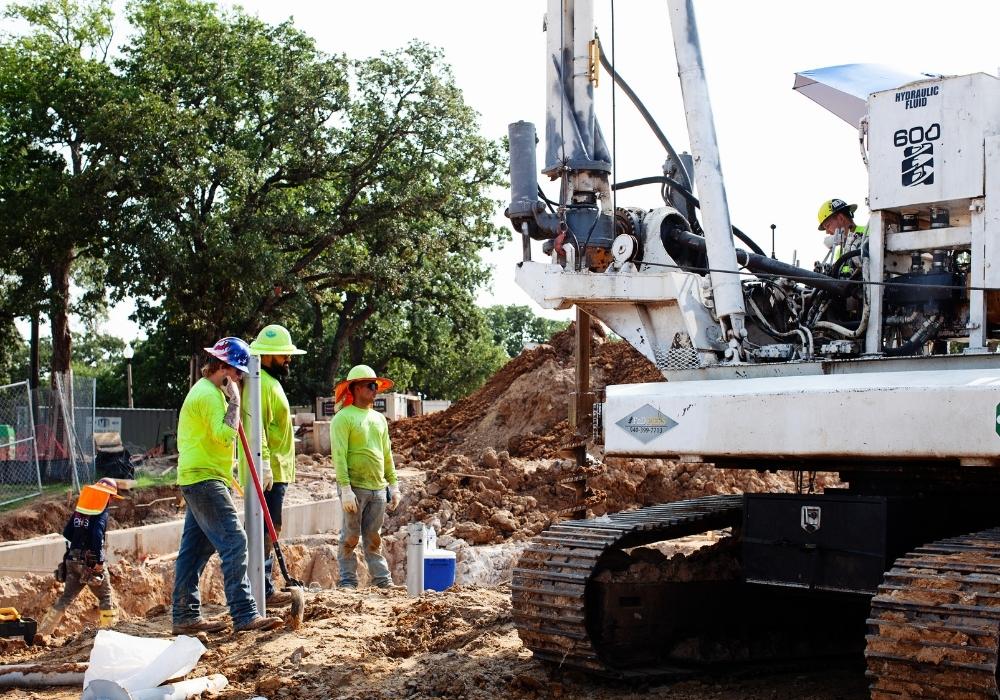
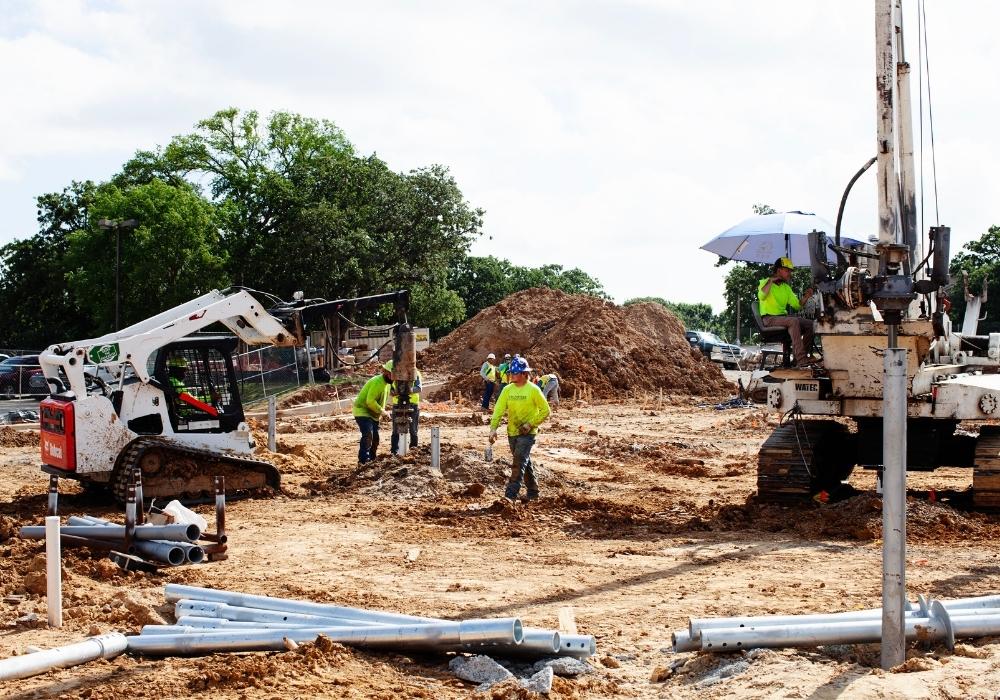
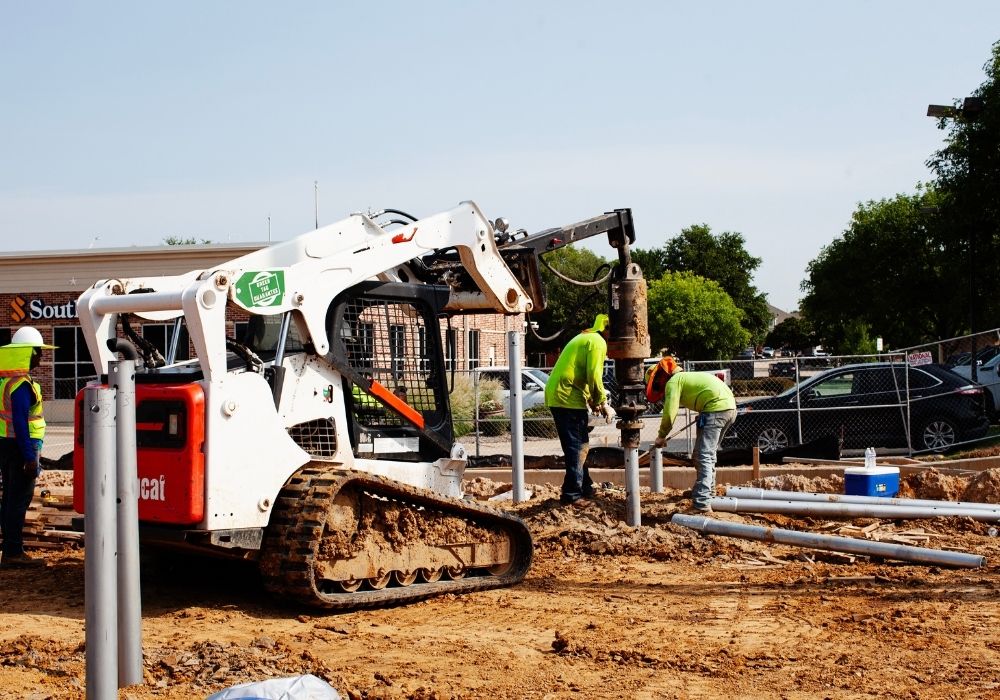
The piers are hydraulically advanced until the required installation torque and bearing capacity are achieved.
Step 5: Transfer the Load
Engineered brackets connect the chimney footing to the pier system so structural loads are transferred to stable soil.
Should You Repair the Chimney Cracks Before Foundation Stabilization?
Generally, structural movement should be addressed before completing final cosmetic masonry repairs.
Otherwise, continued settlement can cause repaired cracks to reopen.
A typical sequence is:
- Diagnose the movement.
- Correct drainage or moisture issues.
- Stabilize the foundation if needed.
- Monitor the structure.
- Complete masonry repairs.
This helps ensure you are repairing the cause rather than repeatedly repairing the symptom.
How to Reduce the Risk of Future Chimney Foundation Problems
Homeowners can reduce risk by:
- Keeping gutters clean
- Extending downspouts away from the foundation
- Maintaining positive drainage
- Repairing plumbing leaks promptly
- Monitoring soil erosion
- Inspecting existing cracks for changes
Consistent maintenance can help reduce excessive soil movement around the chimney and foundation.
When Should You Call a Foundation Professional?
Schedule a professional foundation evaluation when you notice:
- A leaning chimney
- Widening brick cracks
- Stair-step masonry cracks
- Separation between the chimney and house
- New foundation cracks
- Uneven floors
- Multiple signs of structural movement
Early diagnosis may prevent the problem from becoming more extensive and expensive.
Why Choose FnD Piers?
At FnD Piers, we focus on identifying what is causing structural movement before recommending a repair.
Our foundation solutions include:
- Professional foundation evaluations
- Helical pier installation
- Chimney foundation stabilization
- Residential foundation repair
- Deep foundation systems
- Settlement stabilization
We use professional-grade installation equipment and engineered foundation methods designed to provide dependable long-term support.
Final Thoughts: A Cracked Chimney May Be Warning You About Your Foundation
A cracked chimney should not automatically be treated as a masonry problem.
When the chimney is leaning, separating from the home, or developing significant cracks, unstable soil or foundation settlement may be the underlying cause.
Identifying cracked chimney foundation problems early gives homeowners the opportunity to address the cause before movement leads to more extensive structural damage.
If settlement is involved, engineered deep foundation solutions such as helical piers may provide the stable support needed to protect the chimney and the rest of the home.
Frequently Asked Questions
Can foundation problems cause a chimney to crack?
Yes. Settlement, expansive soil, erosion, and uneven foundation movement can place stress on the chimney and cause masonry cracking or separation.
Why is my chimney pulling away from my house?
A chimney may separate from the home when its footing settles independently from the main foundation. Soil movement, erosion, and inadequate support are common causes.
Is a leaning chimney dangerous?
A noticeably leaning chimney should be evaluated promptly. Continued structural movement can damage surrounding building components and may eventually create a safety concern.
Can helical piers repair a settling chimney?
In appropriate soil and structural conditions, helical piers can stabilize a settling chimney by transferring its load from weak surface soils to deeper competent bearing soils.
Should I fix chimney cracks before foundation repair?
If foundation movement causes the cracks, stabilizing the underlying foundation first is generally the better sequence. Cosmetic repairs made before stabilization may crack again if movement continues.
Is your chimney cracked, leaning, or separating from your home?
Contact FnD Piers today for a professional foundation evaluation. Our team can help determine whether foundation settlement is causing the problem and recommend an engineered stabilization solution designed to protect your home for years to come.
Call: (817) 402-7113 Today.