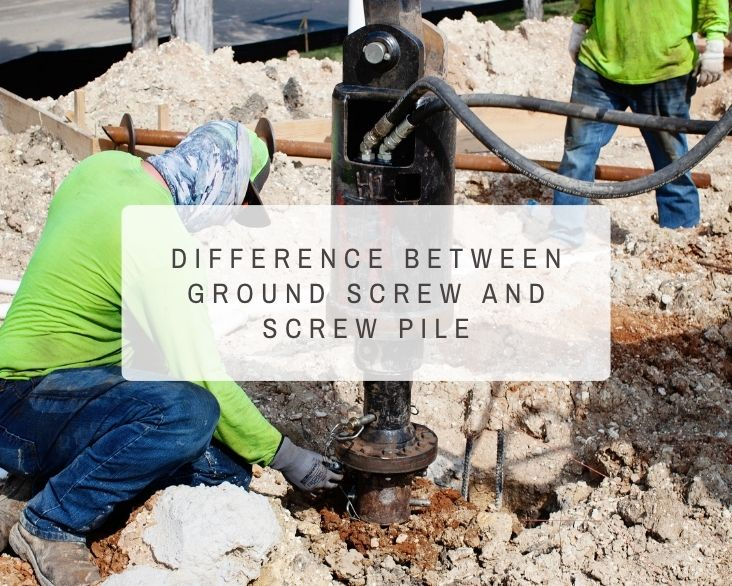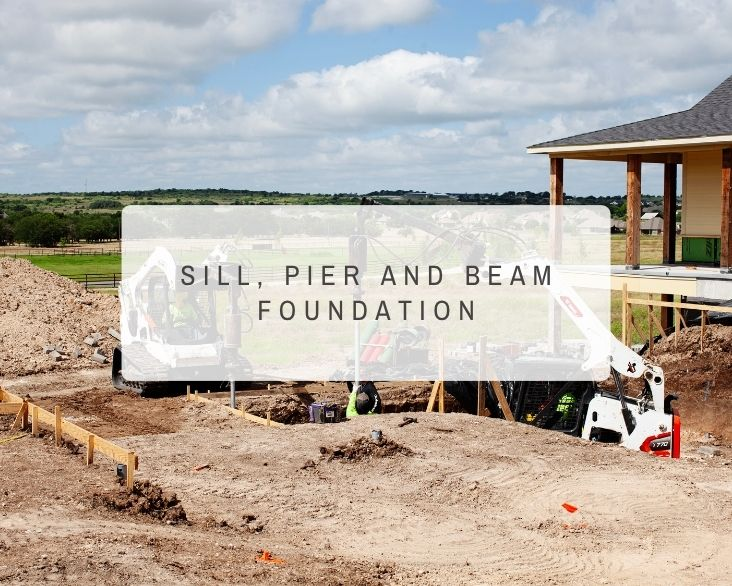
Every building needs a foundation, but not every building needs the same one.
The right foundation type depends on structural loads, soil conditions, climate, groundwater, site access, and construction requirements.
Foundation types generally fall into two categories: shallow foundations and deep foundations. Understanding the differences can help developers, builders, engineers, and contractors select the right system for a project.
At FnD Piers, we specialize in engineered deep foundation solutions, including helical piers for new construction and foundation stabilization.
What Is a Foundation?
A foundation transfers the weight and forces of a structure into the ground.
A properly designed foundation must support the structure while controlling excessive settlement and movement. Engineers consider factors such as:
- Structural loads
- Soil bearing capacity
- Soil type
- Groundwater
- Expansive soils
- Drainage
Site conditions
That is why a foundation that works well for one project may not be appropriate for another.
What Are the Main Foundation Types?
Here are nine common foundation types used in commercial and light construction.
1. Slab-on-Grade Foundation
A slab-on-grade foundation consists of concrete placed over prepared soil to create the base of the structure.
Slab foundations are common in low-rise construction because they can be relatively fast and economical to build.
However, their performance depends heavily on the soil underneath. Expansive soil, erosion, poor drainage, or differential settlement can contribute to foundation movement and cracking.
2. Pier and Beam Foundation
A pier and beam foundation uses piers to support beams beneath the building, elevating the structure above the ground.
Benefits can include easier access to plumbing and utilities and adaptability to certain site conditions.
Potential problems include pier settlement, moisture damage, deteriorated structural components, and uneven floors.
3. Crawl Space Foundation
A crawl space foundation raises the building above ground level while creating a shallow accessible area beneath it.
The crawl space can provide access to plumbing, electrical, and HVAC systems.
Proper moisture control and drainage are important because excessive moisture can contribute to mold, wood deterioration, and structural problems.
4. Basement Foundation
A basement foundation extends below ground level and creates usable space beneath the structure.
Basements can provide additional living, storage, or mechanical space, but they generally require more excavation, drainage, and waterproofing than simpler shallow foundations.
5. Spread Footings
Spread footings distribute structural loads across a larger area of soil.
They are commonly used beneath walls, columns, and structural supports when competent bearing soil exists relatively close to the surface.
If the near-surface soil cannot safely carry the required loads, a deep foundation may be necessary.
6. Mat or Raft Foundations
A mat foundation, also called a raft foundation, uses a large reinforced concrete slab to distribute loads across a substantial area.
Mat foundations may be appropriate for large structures, heavy loads, or situations where multiple individual footings would overlap.
7. Drilled Shafts
Drilled shafts, also called drilled piers, bored piles, or caissons, are deep foundation elements constructed by drilling into the ground and typically placing reinforcement and concrete.
They are commonly used for:
- Commercial buildings
- Bridges
- Industrial facilities
- Infrastructure
- Heavy structures
Drilled shafts can provide substantial capacity but may require large equipment, excavation management, concrete placement, and additional construction time.
8. Driven Piles
Driven piles are prefabricated steel, concrete, or timber foundation elements driven into the ground using specialized equipment.
They are commonly used for bridges, marine construction, industrial facilities, and other heavy structures.
Driven piles can provide significant capacity, although installation may produce substantial noise and vibration.
9. Helical Piers
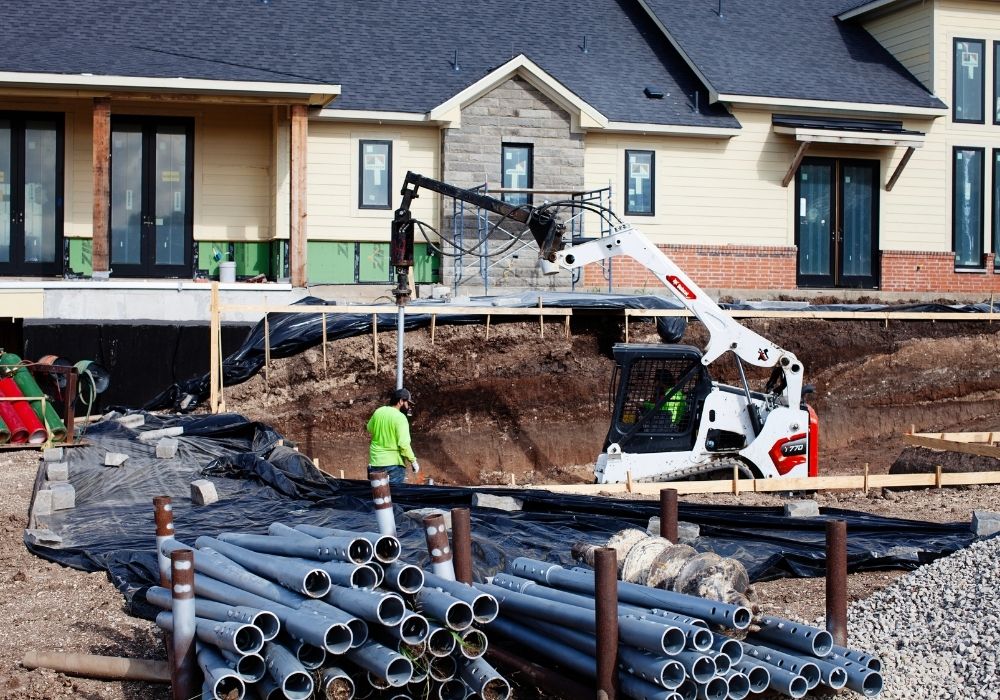
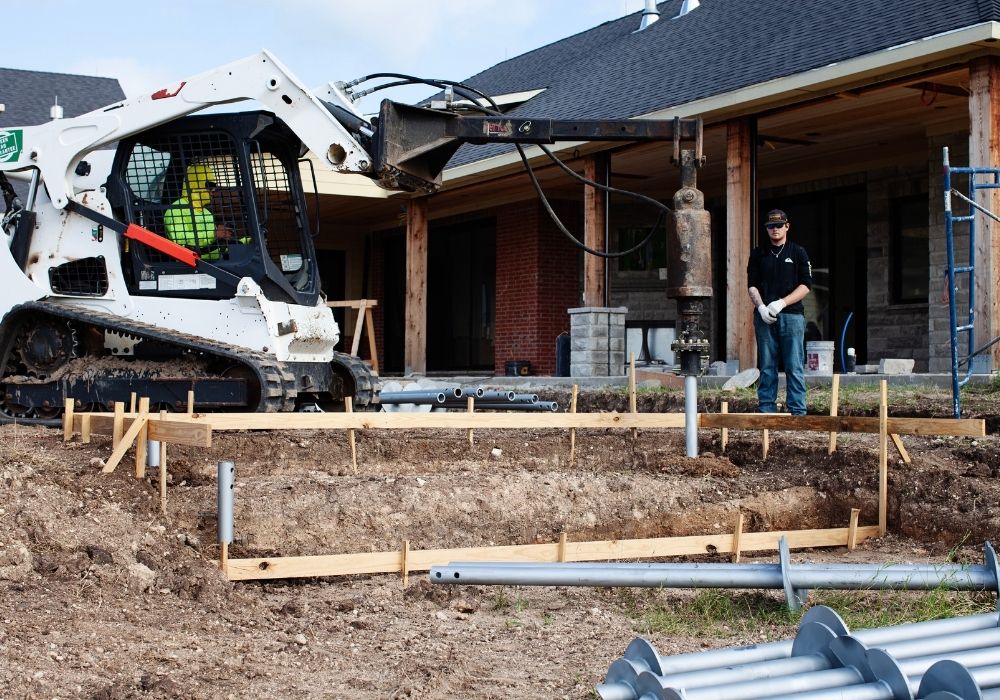
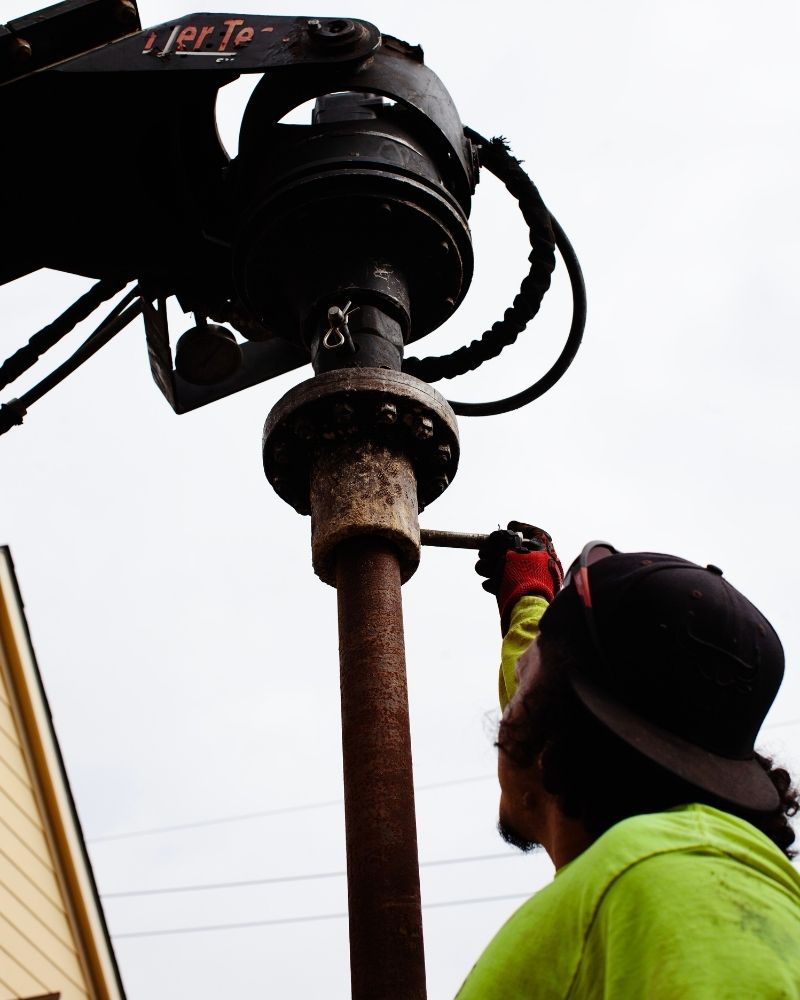
Helical piers, also called helical piles or screw piles, are steel deep foundation elements with one or more helical bearing plates.
Instead of drilling a large hole or hammering the pile into the ground, hydraulic equipment rotates the pier into the soil until the engineered installation criteria are achieved.
Helical piers can be used for:
- New construction
- Commercial foundations
- Light-frame foundations
- Foundation underpinning
- Building additions
- Retaining structures
- Limited-access projects
Shallow Foundations vs. Deep Foundations
One of the most important foundation decisions is whether near-surface soils can adequately support the structure.
Factor | Shallow Foundations | Deep Foundations |
Load Transfer | Near surface | Deeper soil strata |
Common Examples | Slabs, footings, mats | Helical piers, driven piles, drilled shafts |
Typical Use | Competent surface soils | Weak surface soils or heavier loads |
Installation | Usually excavation-based | Varies by system |
Primary Goal | Spread loads near surface | Transfer loads to deeper support |
Neither is automatically better.
The correct choice depends on the structure, soil, loads, and project conditions.
When Are Deep Foundations Needed?
Deep foundations may be considered when:
- Near-surface soils are weak or unstable
- Structural loads are substantial
- Excessive settlement is a concern
- Expansive soils create movement
- Existing foundations require stabilization
- Site conditions make conventional shallow foundations impractical
A geotechnical investigation can provide important information about soil conditions and help engineers determine the appropriate foundation design.
Why Consider Helical Piers?
When a deep foundation is required, helical piers can offer several advantages.
Fast Installation
Helical piers can be installed without drilling large excavations for each pier.
Immediate Load-Bearing Capacity
Because the steel pier itself does not require concrete curing, it can accept structural load immediately after proper installation and connection.
Minimal Excavation
Helical installation typically produces very little soil spoil compared with drilled foundation systems.
Low Vibration
Helical piers are rotated rather than hammered into the ground, making them useful where vibration is a concern.
Installation Verification
Installation torque can be monitored as the pier advances and used as part of the engineered capacity-verification process.
Limited-Access Applications
Relatively compact hydraulic equipment can make helical piers useful around existing structures and on restricted-access sites.
How Do You Choose the Right Foundation Type?
Instead of simply asking, “Which foundation costs the least?”, consider the total project requirements.
Five questions can help:
- SOIL: What soil will support the structure?
- LOAD: How much weight and force must the foundation carry?
- SITE: What access and construction constraints exist?
- SCHEDULE: How quickly must construction proceed?
- COST: What is the total installed cost of the system?
The objective is to select the foundation that provides the required performance while controlling construction cost, schedule, and risk.
Can Helical Piers Repair an Existing Foundation?
Yes, in appropriate applications.
Helical piers are commonly used for foundation underpinning when an existing foundation has settled because near-surface soils no longer provide adequate support.
The piers are installed into competent bearing soils and connected to the existing foundation with engineered brackets.
This allows structural loads to be transferred away from unstable surface soils and into the deeper pier system.
Why Choose FnD Piers?
FnD Piers specializes in engineered helical pier and deep foundation solutions.
We work with:
- General contractors
- Structural engineers
- Geotechnical engineers
- Developers
- Builders
- Property owners
Our capabilities include helical pier installation, new construction foundations, foundation underpinning, commercial deep foundations, foundation stabilization, and value-engineered foundation alternatives.
The objective is simple: install the right foundation system efficiently while meeting the structural requirements of the project.
Frequently Asked Questions About Foundation Types
What are the most common foundation types for smaller buildings?
Common types for light structures include slab-on-grade, crawl space, pier and beam, and basement foundations.
What are the two main types of foundations?
Foundations are generally divided into shallow foundations and deep foundations.
What are examples of deep foundations?
Common deep foundation systems include helical piers, driven piles, and drilled shafts.
When is a deep foundation needed?
A deep foundation may be necessary when near-surface soils cannot adequately support the structure, loads are substantial, settlement must be controlled, or other project conditions require deeper load transfer.
Can helical piers be used for new construction?
Yes. Properly engineered helical piers can support new commercial buildings, additions, and other structures.
Final Thoughts: Choose the Foundation That Fits the Project
There is no single best foundation type for every building.
Slab foundations, crawl spaces, basements, spread footings, drilled shafts, driven piles, and helical piers all have appropriate applications.
The goal is to match the foundation type to the soil, structural loads, site conditions, schedule, and budget.
When weak soils, foundation settlement, difficult access, or construction schedules make conventional foundations challenging, helical piers may provide an efficient engineered alternative.
Need Help With a Foundation Solution?
Planning a new construction project or dealing with an existing foundation problem?
Contact FnD Piers to discuss your project. Our team can work with your engineers and contractors to determine whether a helical pier foundation can provide the capacity, constructability, and long-term performance your project requires.
Call: (817) 402-7113 Today