When designing a deep foundation system, engineers and contractors often evaluate several options, including drill shafts and driven piles. Both have been used successfully for decades on commercial, industrial, and infrastructure projects, but each offers unique advantages and limitations depending on the site conditions, structural loads, and construction schedule.
In recent years, helical piers have emerged as an innovative alternative that combines fast installation, minimal site disturbance, and immediate load-bearing capacity.
At FnD Piers, we work with engineers, developers, and contractors to select foundation systems that balance performance, constructability, and long-term value. In this guide, we’ll compare drill shafts, driven piles, and helical piers to help you determine the right solution for your next project.
What Are Drill Shafts?
Drill shafts, also called drilled shafts, drilled piers, bored piles, or caissons, are deep foundation elements constructed by drilling a cylindrical hole into the ground and filling it with reinforced concrete.
Drill shafts are commonly used for:
- High-rise buildings
- Bridges
- Industrial facilities
- Retaining structures
- Heavy commercial construction
Because they can be constructed in large diameters and significant depths, drill shafts are capable of supporting substantial structural loads.
What Are Driven Piles?
Driven piles are prefabricated foundation elements made from steel, concrete, or timber that are driven into the ground using hydraulic hammers or impact equipment.
Driven piles are frequently used for:
- Bridges
- Marine structures
- Industrial plants
- Ports
- Large commercial buildings
As the pile is driven into the soil, resistance increases until the required load-bearing capacity is achieved.
Driven piles have long been considered one of the standard solutions for heavy-load construction projects.
Drill Shafts and Driven Piles: Key Differences
Although both systems serve the same purpose—transferring structural loads to deeper, stronger soils—their installation methods are very different.
Feature | Drill Shafts | Driven Piles |
Installation Method | Hole drilled and filled with reinforced concrete | Prefabricated pile driven into ground |
Excavation Required | Yes | No |
Concrete Required | Yes | Usually No |
Noise During Installation | Low to Moderate | High |
Vibration | Minimal | Significant |
Heavy Equipment | Required | Required |
Installation Speed | Moderate | Fast |
Best Applications | Large commercial and bridge foundations | Heavy industrial and infrastructure projects |
The biggest distinction is how each system is installed. Drill shafts are constructed in place, while driven piles are manufactured first and then installed using impact or vibration equipment.
Challenges of Drill Shafts
Drill shafts offer excellent load capacity but can present several construction challenges.
These include:
Extensive Excavation
Large-diameter holes must be drilled before concrete placement.
Groundwater Management
High groundwater levels can complicate excavation and concrete placement.
Weather Delays
Concrete placement may be affected by adverse weather conditions.
Longer Construction Time
Excavation, reinforcing steel placement, concrete pouring, and curing all extend project schedules.
Challenges of Driven Piles
Driven piles also have limitations depending on the project.
Noise
Impact hammers generate significant noise, making driven piles less desirable near occupied buildings or populated areas.
Vibration
Pile driving can transmit vibrations to nearby structures and underground utilities.
Site Access
Large cranes and pile-driving equipment require substantial staging areas.
Soil Displacement
Driven piles displace surrounding soil, which may not be suitable for every site.
How Helical Piers Compare
For many commercial and light industrial projects, helical piers provide an attractive alternative to both drill shafts and driven piles.
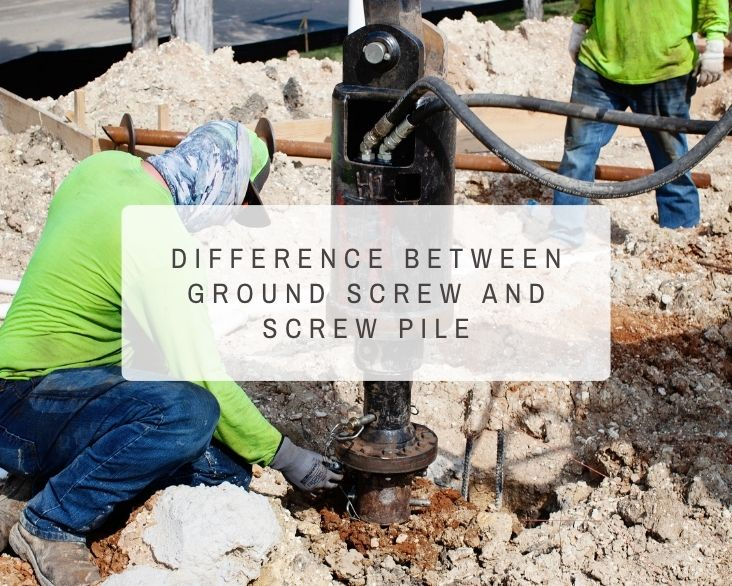
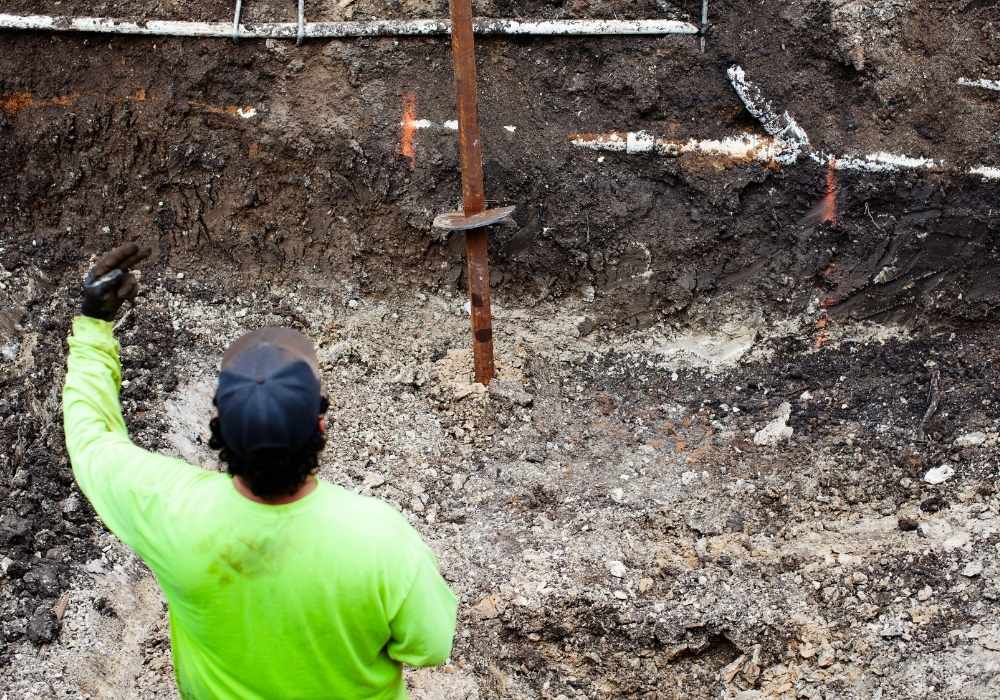
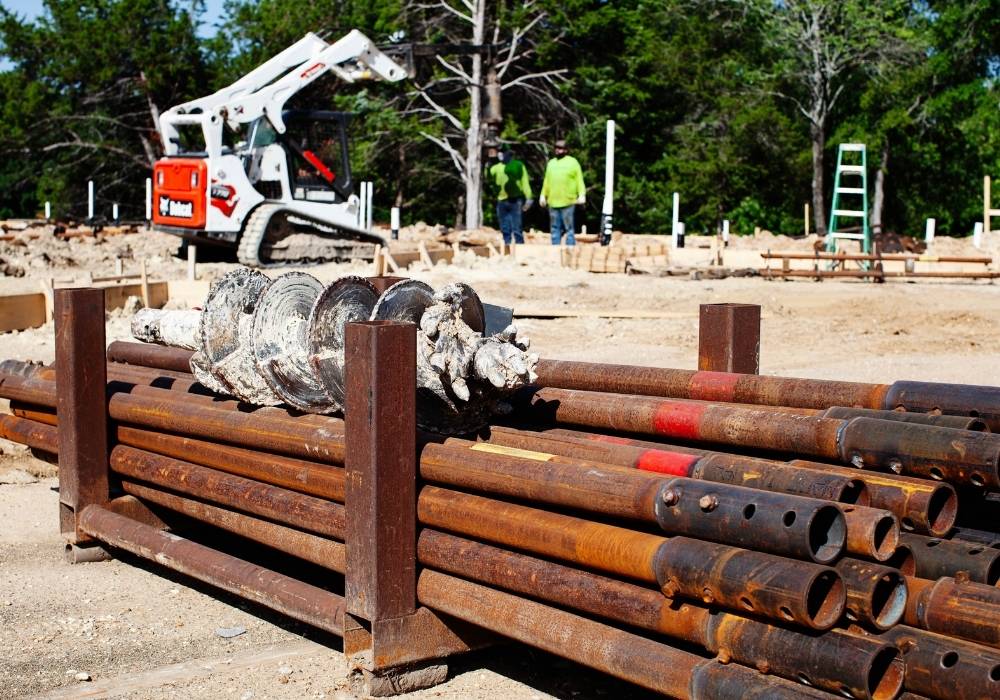
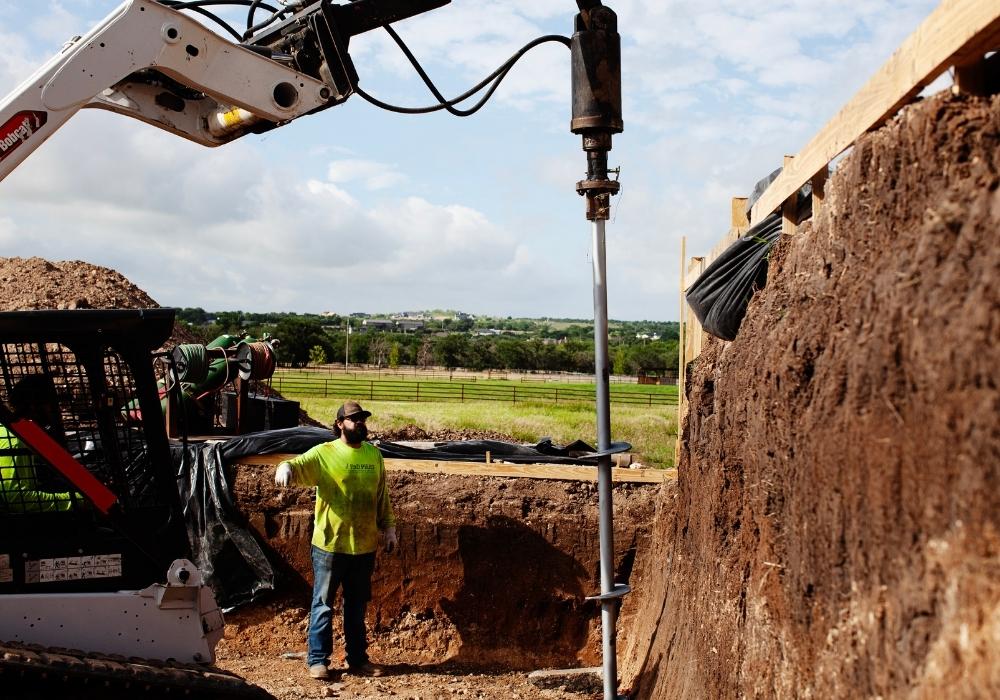
Helical piers are steel shafts fitted with helical bearing plates that are mechanically rotated into the ground using hydraulic drive heads.
Unlike drill shafts or driven piles, they:
- Require little or no excavation
- Produce minimal vibration
- Generate very little noise
- Provide immediate load-bearing capacity
- Minimize disturbance to surrounding soil
These advantages make them especially valuable on sites with restricted access or tight construction schedules.
Benefits of Helical Piers
Faster Installation
Helical piers can often be installed significantly faster than drilled shafts because there is:
- No excavation of large-diameter holes
- No reinforcing cage installation
- No concrete curing period
Construction can frequently continue immediately after installation.
Immediate Load Capacity
One of the biggest advantages of helical piers is that they support structural loads immediately after installation.
This can shorten construction schedules and reduce overall project costs.
Minimal Site Disturbance
Because helical piers are screwed into the ground rather than hammered or excavated, they create:
- Less vibration
- Lower noise
- Minimal soil displacement
- Reduced landscape disruption
This makes them ideal for urban construction, building additions, and retrofit projects.
Excellent Performance in Difficult Soil Conditions
Helical piers perform exceptionally well in:
- Expansive clay
- Loose fill
- Sandy soils
- High water table conditions
- Soft soils
Their modular design allows engineers to adjust shaft lengths and helix configurations based on project requirements.
When Drill Shafts Are the Best Choice
Drill shafts remain an excellent option when projects require:
- Extremely high axial loads
- Large bridge foundations
- Massive structural columns
- Deep rock socketing
- Specialized heavy civil construction
When Driven Piles Are the Best Choice
Driven piles are often preferred for:
- Bridges
- Marine construction
- Offshore facilities
- Large industrial plants
- Infrastructure projects with heavy structural loads
When Helical Piers Are the Better Choice
Helical piers are frequently the preferred solution when projects require:
- Fast construction schedules
- Limited site access
- Minimal vibration
- Low noise
- Existing building retrofits
- Foundation underpinning
- Commercial additions
- Settled foundation repair
They are also an excellent choice for projects where preserving landscaping or minimizing disruption is a priority.
Choosing the Right Foundation System
No single foundation system is ideal for every project.
The best choice depends on factors such as:
- Soil conditions
- Structural loads
- Project budget
- Construction schedule
- Site accessibility
- Environmental considerations
A geotechnical investigation combined with structural engineering analysis helps determine the most appropriate foundation solution.
Why Choose FnD Piers?
At FnD Piers, we specialize in engineered deep foundation solutions designed to maximize performance while reducing construction risk.
Our services include:
- Helical pier installation
- Commercial deep foundations
- Foundation underpinning
- Structural stabilization
- Foundation design assistance
- Geotechnical collaboration
We work closely with engineers, architects, developers, and contractors to recommend the most efficient foundation system for every project.
Final Thoughts: Matching the Foundation to the Project
When comparing drill shafts and driven piles, both systems have proven track records and remain essential components of modern construction. However, advances in helical pier technology have provided engineers and contractors with another highly effective option.
For projects that prioritize speed, minimal site disruption, immediate load capacity, and flexible installation, helical piers often deliver exceptional value without sacrificing structural performance.
The key is choosing a foundation system based on engineering requirements, not simply tradition.
Frequently Asked Questions
What is the difference between drill shafts and driven piles?
Drill shafts are constructed by drilling a hole and filling it with reinforced concrete, while driven piles are prefabricated structural elements that are hammered or vibrated into the ground.
Are helical piers stronger than driven piles?
Both systems can provide excellent structural support when properly engineered. The best choice depends on soil conditions, design loads, project constraints, and construction goals rather than one system being universally stronger.
Why are helical piers becoming more popular?
Helical piers offer rapid installation, immediate load-bearing capacity, minimal vibration, low noise, and reduced site disruption, making them an attractive solution for many commercial, new construction, and retrofit projects.
Planning a commercial or new construction project?
Contact FnD Piers today to schedule a foundation consultation. Our experienced team will evaluate your site conditions, review your engineering requirements, and recommend the deep foundation solution that delivers the best combination of performance, efficiency, and long-term value.
Call: (817) 402-7113 Today.